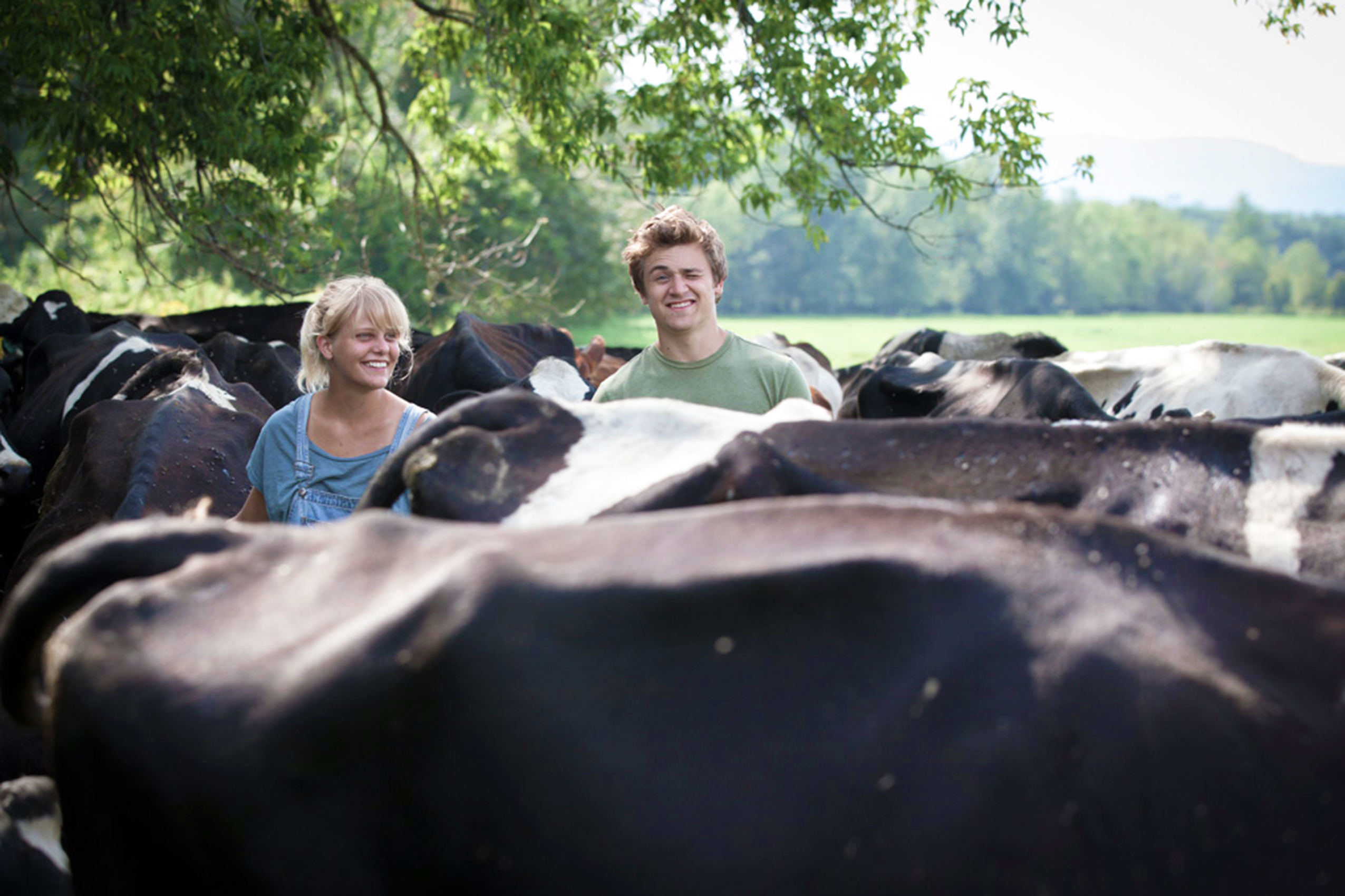
Currently, 20 percent (or about 200 Vermont dairies) are organic, up from just 33 in 1998. This increase in organic dairy production in Vermont is something to celebrate, since organic dairy products have been shown to have many nutritional and environmental benefits. Nutritionally, organic milk from grass fed cows has been shown to be higher in CLA (an antioxidant) and ALA (an Omega 3 fatty acid). For years, dairy got a bad rap for being high in fat, though now we’re beginning to understand that there are many benefits to consuming healthy fats.
From an environmental perspective, organic dairy production offers improved water quality due to decreased pollution from agricultural runoff (a cleaner Lake Champlain!); decreased soil erosion and increased soil fertility; decreased antibiotic use; and improved animal health and welfare. Additionally, organic dairy farming offers our state an economic boost. According to a report from the University of Vermont from 2012, Vermont’s organic dairy farms contributed $76 million to the state’s economy, supported over 1,000 jobs, and offered a better return on investment for farmers. Now let’s celebrate that with a big ‘ol scoop of ice cream from Strafford Organic Creamery, or a pint of famous Maple Milk from Kimball Brook Farm!
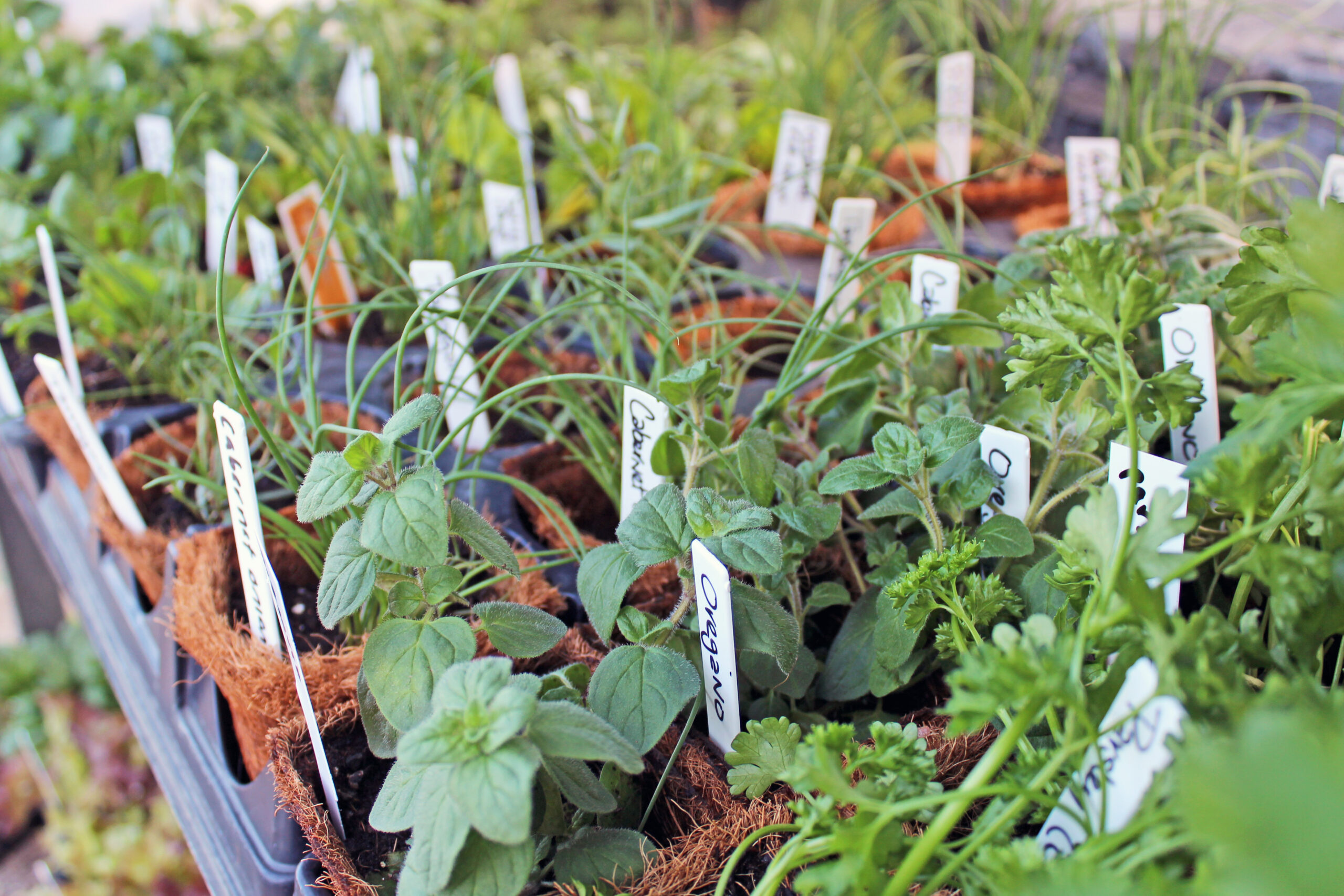
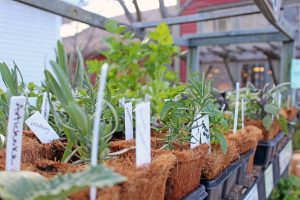
Memorial Day weekend is upon us, and according to local garden lore, that means it’s officially safe to put even the most frost-sensitive seedlings into your soil. When choosing your plants this year, we invite you to check out our gorgeous local seedling offerings from New Leaf Organics!
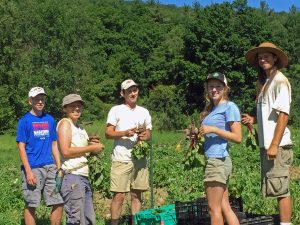
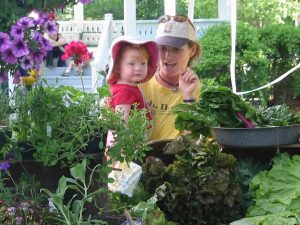
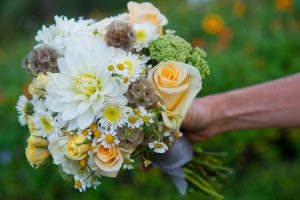
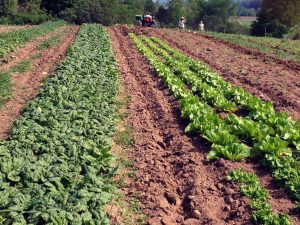
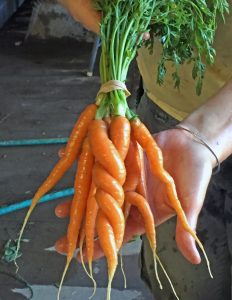
New Leaf Organics, nestled on the town line between Bristol and Monkton, is a certified organic vegetable and flower farm established in 2001 by Jill Kopel and Skimmer Hellier. They primarily grow food and plants for people in the five-town community through their on-site farm stand, their CSA program, two farmers’ markets, and also to wholesale accounts like the Co-op. They also raise specialty cut flowers for weddings and events. When in season, you can find their spinach, kale, parsley, fresh onions, and more glorious veggies & herbs in our produce department.
So, why choose local seedlings?
Aside from the fact that you’re supporting a wonderful local farm and keeping your dollars local, it makes good sense to purchase local seedlings for the assurance that you’re buying healthy plants that are regionally appropriate for our unique growing conditions here in Vermont. You’re also helping prevent the spread of plant diseases (blight, anyone?) and invasive pests like root aphids that travel in the soil. Additionally, Many plants from large commercial nurseries & garden centers are treated with plant growth regulators or PRGs. PRGs are applied to nursery plants to preserve or encourage certain traits that help make plants more marketable. This might include bloom-holding capabilities on flowers or growth-stunters that would keep tomatoes, peppers, and the like from growing leggy while awaiting sale. PRGs are classified as pesticides and their safety has not been established. Plants at large garden centers are also often treated with neonicotinoids. These chemicals are systemic, which means they are absorbed by the plant tissues and expressed in all parts, including nectar and pollen. Unfortunately, this spells disaster for bees, butterflies, and other pollinators that are so vital to our health and our food supply.
By choosing local, organic seedlings, you’re choosing to support local farms, your local economy, and preserving the health of your local ecosystem. It’s a win-win!
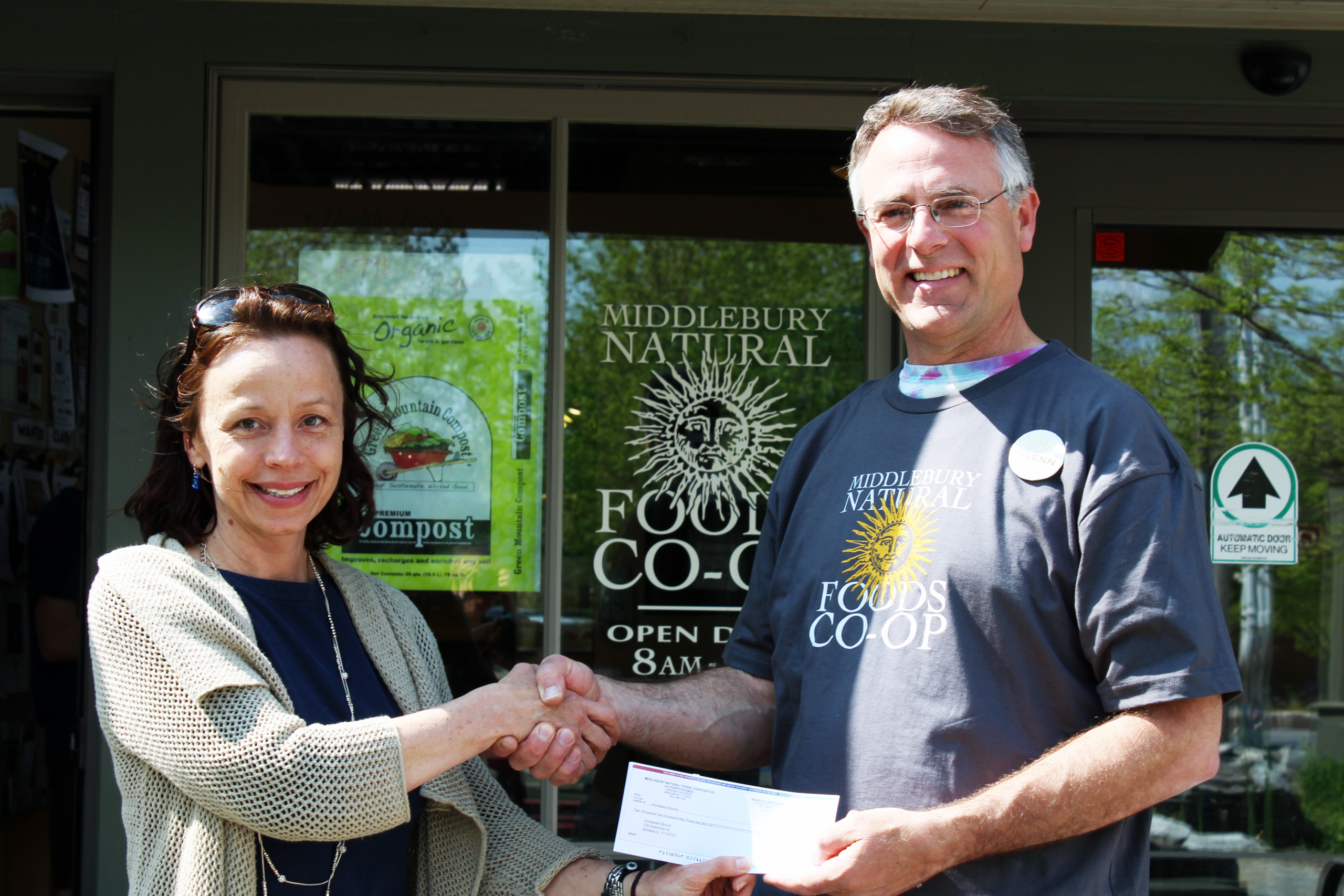
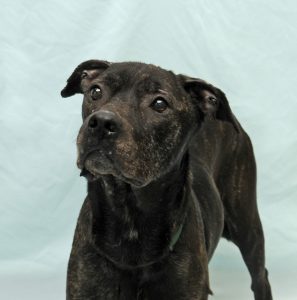
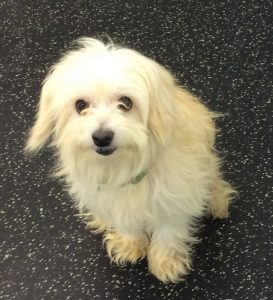
Thank you so much for “rounding up” during our Rally for Change, May 12-18! With your help, we were able to raise $1,126 for Homeward Bound. The Co-op matched that amount, so we were able to donate a total of $2,252 to help care for animals in need.Here’s a word from Homeward Bound Director, Jessica Danyow, about just how they’ll put the donation to use:
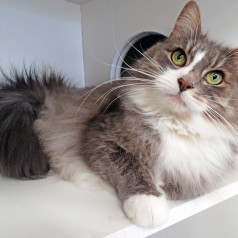
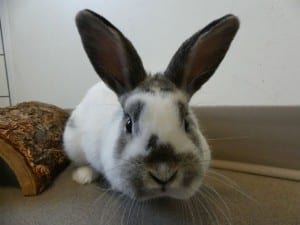
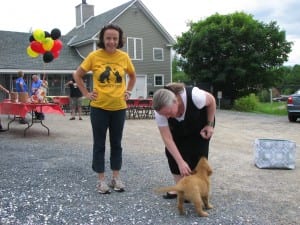
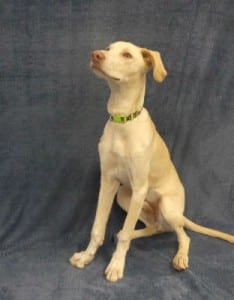
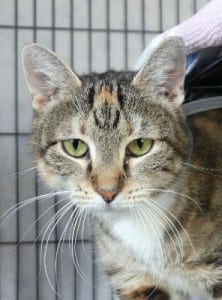
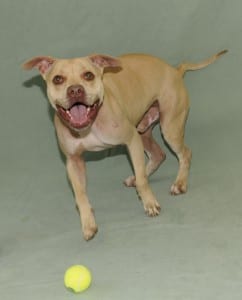
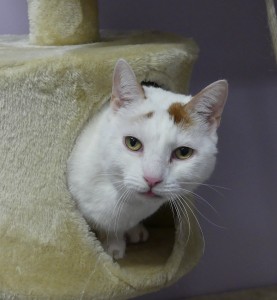
Homeward Bound, Addison County’s Humane Society, is so grateful for the community fundraising done by the Middlebury Coop through Rally for Change. By transporting dogs and cats to Homeward Bound from high-volume shelters around the country, we are on track to double the number of animals we help annually. We are proud of this and grateful for funds that will allow us to meet the medical needs and expenses of these animals. Rally for Change donations will help us pay for diagnostic work-ups for senior animals, dental cleanings, spay and neuter surgeries and more! Here are two beneficiaries of Rally for Change donations: Hugo, a sweet, shy hound mix from upstate New York and delicate Nema, who hails all the way from Texas. Thank you!
Oooh….just look at those beauties! The Co-op is celebrating our 40th Anniversary with limited edition mugs from Sunset Hill Pottery in Neenah, Wisconsin. Sunset Hill received recognition as “America’s Cleanest, Greenest Pottery” last year. Follow this link to find out just what changes they’ve made at their facility to make their pottery better for their workers and for the environment.
Our new mugs are available, for a limited time, in four gorgeous glazes and styles:
Fresh Awakening – for those of us who need a few extra ounces in the morning
Traveler – for the busy bee who needs their cup to stay hot until they can get to it
Whole Lotta Latté – for the “sit and sip” crowd (great for soup and chili, too)
Pot Belly – for anyone – just because it’s so cute!
Stop by and pick up yours (or one of each) while they’re still here. They make great gifts, too!
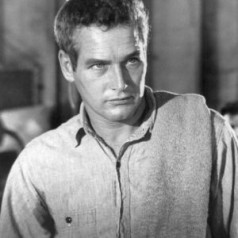
This week, we’re casting our Co-op Spotlight on Newman’s Own to tip our hat to the man who decided to launch a food business that gives away 100% of its profits to charity. Read on to learn more about how Paul Newman accidentally found himself at the center of a successful food business and the impact of his incredible philanthropy:
Paul Newman’s craft was acting, his passion was auto racing, his love was his family and friends. But his heart and soul were dedicated to helping make the world a better place. His commitment to philanthropy was clear — he used his influence, gave of his financial resources, and personally volunteered to advance humanitarian and social causes around the world. While Paul Newman was a Hollywood star of extraordinary celebrity and a person recognized for exceptional commitment and leadership for philanthropy, he lived his life as an ordinary person, which he always considered himself. He was a man of abundant good humor, generosity, and humility.
Newman’s Own began as a bit of a lark. In 1980, Paul Newman and his pal A.E. Hotchner filled empty wine bottles with his homemade salad dressing to give as gifts for the holidays. After friends and neighbors came clamoring for refills, Paul and “Hotch” were convinced that the special recipe was good enough to be bottled and sold.
Newman’s Own Salad Dressing was officially launched in 1982 and, surprisingly, became an instant success. The first year of profits exceeded $300,000 and Paul declared, “Let’s give it all away to those who need it.” Without ever taking personal compensation, Paul shared his good fortune. It was a unique concept at the time – giving away all after-tax profits, but he believed that helping others was just the right thing to do.
In these thirty years, Paul Newman and the Newman’s Own Foundationhave given over $460 million to thousands of charities. Newman’s Own Foundation is an independent, private foundation formed in 2005 by Paul Newman to sustain the legacy of his philanthropic work. Funded entirely through the profits and royalties of Newman’s Own products, the Foundation does not maintain an endowment, raise funds, or accept donations. The Foundation believes that each of us, through the power of philanthropy, has the potential to make a difference. Since 1982, when Paul Newman first declared, “Let’s give it all away,” more than $460 million has been donated to thousands of nonprofit organizations helping people in need around the world.
Today, Newman’s Own produces over 200 individual products across 20 categories. Always great tasting, always top quality, just the way our founder, Paul Newman, insisted. We’ll always follow his vision for putting quality first. The Newman’s Own business model has remained the same over the years. The enterprise remains true to Paul’s original mission and values, using only all-natural, high-quality foods and donating 100% of profits and royalties to charity. Who would’ve thought that so much good could come from a simple idea? As Paul said, it has been “a heck of a ride.”
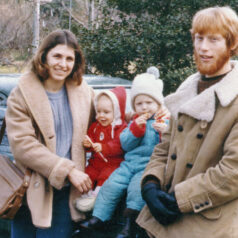
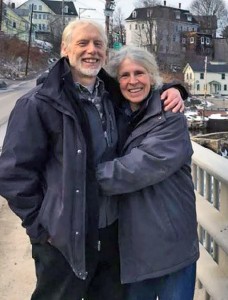
Our 40th Anniversary Celebration Continues! Every month, we’ll post another story and photos from some of our long time Co-opers. Here’s another contribution to our historical archive from Jeremy Singley. Jerry and Pauline Singley are long time Co-op members, starting from when we were just a fledgling buying club. They were instrumental in helping acquire and renovate the original Co-op Storefront at the Old Train Depot on Seymour Street. Listen to what Jerry has to say about their history with the Co-op and our metamorphosis into the much larger and successful organization that we’ve become.
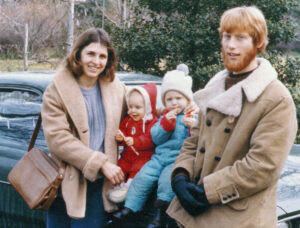
Jeremy & Pauline Singley, with Gwen & Emily, 1974
A History with the Co-op from Jeremy Singley
Pauline and I joined the Middlebury Natural Foods Coop in 1974, not long after its debut. At the time the Coop was a sort of bulk foods buying club of like-minded folks. The group met monthly to engage in a friendly auction amongst themselves, each committing to purchase increasing or decreasing portions until their individual orders added up to, say, a whole wheel of cheese or a 50 pound bag of flour. These goods would then be ordered at wholesale rate, and stored in Jane and Marshall Eddy’s barn in Middlebury. Upon arrival the bulk goods were broken down into portions by a revolving body of member volunteers. Cheese wheels, for example, would be reduced to individually wrapped and labeled wedges and stacked in the group’s fridge. Members who had made purchases were encouraged to be timely in picking up their orders.
Over time sub-groups grew up in a number of vicinities, each overseen by a “coordinator.” Pauline and I represented the East Middlebury/Salisbury region, at which time I also became a Coop Board member. By then the group had grown large enough that meetings were no longer necessary. In lieu of meetups, members filled out a monthly “pre-order” form. The total number of members in all the sub-groups combined guaranteed that enough food would be pre-ordered in any given month to support bulk purchases. There were scraps left over of course—a wedge of cheddar, for example—but the selections that were on offer in those early days were goods that would keep until the next order, at which time they could be offered again. Or that was the theory.
Two issues cropped up.
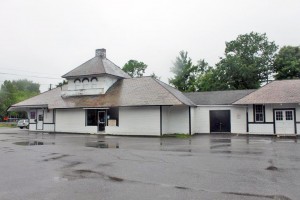
The first was the leftover problem. That didn’t always work out. Plus, members craved a wider selection, but how do you handle, say, lettuce, on a long-term basis. So [Board member?] Charles Adams rented the abandoned train station on Seymour Street and started a “store front.” Now anyone could walk in and buy, not only that orphan cheddar wedge, but a growing list of new direct-sale offerings, displayed in bins and buckets with spunky hand-written labels.
The second problem was the work we coordinators had to do. We were in charge of sending out the order sheets, tallying the members’ orders, bulk ordering, rousting up four or five volunteers and setting up a “breakdown” day—where the bulk goods would be re-packaged to fill the individual member orders—hanging around until all the member orders had been picked up, and then delivering or storing the ones that weren’t.
Train Depot on Seymour Street
When the store front had matured to the point that it offered everything the pre-orders did, and more, available throughout the month, I published a suggestion that we terminate pre-order and just focus on the store. This was not at first a popular idea. Many members enjoyed the camaraderie of the breakdowns and the whole-earth feel of the process. But the majority realized they preferred to be able to buy what they wanted when they wanted. So Charlie, myself and a stalwart crew of volunteers tore into the train station, replacing the floor, improving the lighting, building shelves and, eventually, even installing a walk-in fridge! The budget was tight. We’d begun with a tackle box as our cash exchange. Then one of those old Ka-ching! cash registers turned up from somewhere. I built a checkout counter in my woodshop.
The store grew so fast it was decided a digital cash register was needed to help keep track of the flow. This was a big deal. The board did not have that much to spend. But I had an idea. After checking with my bank, I approached a number of members—mostly respected business owners—and asked if they would counter-sign a loan. They all agreed. The cash register was in.
When the store outgrew the station and moved to its present location (but much smaller than today!) my wooden counter went along. Eventually, so did our kids. In the late 80’s to early 90’s Gwen worked as cashier, stocker, and made intricate illustrated shelf labels. Emily also cashiered and stocked, as well as helping to manage the HABA (health and beauty aids) section, now called the Wellness Department.
My homemade checkout counter worked well for years, even as it was gradually surrounded by multiple factory-made counters and registers. Every time I walked in—as a shopper now, no longer a board member—that counter reminded me of the old days, and I was awed by how far Charlie’s brainchild had grown.
Today marks the start of our Rally For Change to benefit Homeward Bound – Addison County’s Humane Society! When shopping at the Co-op today through May 18th, your cashier will ask you if you’d like to round up to help our furry friends in need. Each time you do, 100% of your contribution will go directly to support Homeward Bound, and we’ll match your donations! Read on to learn more about Homeward Bound and they very important work they do for our community:
Homeward Bound: Addison County’s Humane Society is a private, independent non-profit organization dedicated to protecting the well being of homeless, abandoned, and abused or neglected animals. Founded in 1975, Homeward Bound is happy to have recently celebrated its 40-year anniversary, and since its inception has served over 20,000 animals.
Mission:
To educate the community and improve the lives of animals, alleviate their suffering, and elevate their status in society. We safeguard, rescue, shelter, heal, adopt, and advocate for animals in need, while inspiring community action and compassion on their behalf.
Vision:
We envision a world that is nurturing and compassionate towards all animals
We envision a world where no animal suffers from abuse or neglect
We envision a world in which all people regard companion animals as lifelong, valued family members
At Homeward Bound, we safeguard, rescue, shelter, heal, adopt and advocate for animals in need, while inspiring community action and compassion on their behalf. We serve approximately 650 animals in the shelter every year and provide services and support for an average of 200 community animals annually. We operate programs to help curb pet overpopulation, provide support for low-income pet owners, and address issues of animal neglect and cruelty. We offer humane education on many levels, including a full day summer camp, and we have an ongoing volunteer program with 81 active volunteers.
We will apply any proceeds received from the Middlebury Coop’s Rally for Change week to the costs providing direct animal care and medical services. All of the animals in our shelter receive spay/neuter services, vaccinations as needed, microchip identification, and other necessary medical procedures as recommended by veterinarians. Our 2016 budget for providing for spay/neuter and medical care is $27,000.
We are grateful for support of the Middlebury Coop and to be named as a beneficiary of Rally for Change week.
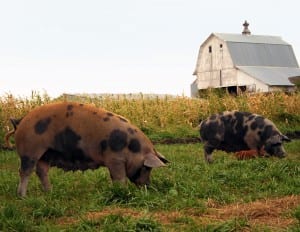
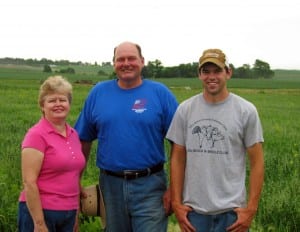
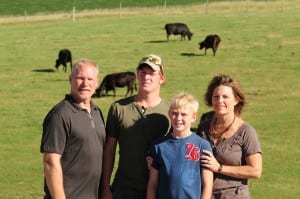
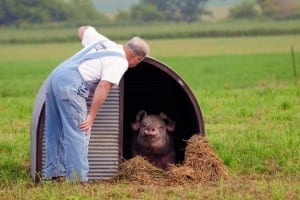
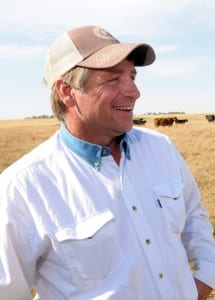
We’re casting our Co-op Spotlight on Niman Ranch this week to highlight their commitment to offering all-natural meats raised by small family farmers committed to sustainable and humane practices. We all know that words like “natural” and “sustainable” can be applied to foods without any real, tangible, meaningful standards to back them up. In fact, the USDA legally allows the use of the word “natural” on meat and poultry despite the fact that the term isn’t currently well-defined or meaningful, rendering it a deceptive marketing ploy rather than a clear indication of how a meat or poultry product was raised or processed. That’s why we love Niman Ranch. When they throw around words like “natural’, “sustainable”, and “humane”, it actually means something. Here’s how they back it up:
Raised on more than 700 small sustainable family farms and ranches
Raised according to the most humane animal handling protocols in the industry
Raised by farmers who adhere to sustainable agricultural practices.
Never given antibiotics or hormones – ever.
Never fed animal by-products – ever.
What do we mean when we say our animals are raised humanely?
All Niman Ranch livestock are humanely raised according to the strictest animal handling protocols. These protocols were written based on the recommendations of animal handling expert Dr. Temple Grandin. Our independent family farmers are required to raise their livestock outdoors or in deeply bedded pens. Their animals have continual access to food and water and spend their entire lives with their litter mates. This allows the animals to express their natural instinctive behaviors and form healthy social groups. Gestation crates and farrowing crates are strictly prohibited.
What does sustainability mean to us?
Sustainability is at the core of our Raised With Care philosophy. We believe that sustainable agriculture is best described as livestock raising and production practices which balance current resource demands without compromising the future of the resources from an environmental, economic, and human perspective. We realize that a sustainable system is not successful unless we also maintain the economic health of all our farmers and ranchers, so our sustainability practices incorporate this understanding into what we call our Top 10 Sustainability Best Practices:
Pay farmers a premium in accordance to our strict raising protocols
Establish a floor price for our farmers tied to the cost of inputs of feed and fuel
Promote agricultural biodiversity by using a wide range of breeds uniquely suited to the specific natural environments in which they are raised
Practice genetic diversity to keep breeds healthy over generations
Maintain livestock density well below conventional industry standards to prevent overburdening the land
Raise livestock in geographies where feed is locally available to reduce the carbon footprint associated with feed transport
Mitigate soil erosion and/or loss through: maintaining pasture with coverage for livestock, crop rotation, rotational grazing and responsible waste/manure management.
Prohibit the use of concentrated liquid manure systems. Manure is managed as a beneficial resource and is never allowed to negatively impact the local environment.
Use buffer strips and grassed waterways
Provide a robust and growing marketplace for our farmers and ranchers livestock
Do animals need antibiotics?
Since our animals are not raised in crowded, unsanitary or stressful conditions, the need for antibiotics to treat sick animals is very low. Our animals never receive antibiotics – ever.
What if an animal gets sick?
Occasionally, one of the animals raised for us becomes sick and cannot get well without antibiotics. Our animal welfare protocols allow for the animal to be treated, but then removed from the Niman Ranch program. It is never sold as Niman Ranch meat.
How can I be sure that all Niman Ranch farmers and ranchers adhere to the protocols?
We follow a 3-step process to ensure full compliance with our strict protocols:
All our farmers and ranchers regularly complete affidavits agreeing to follow all of our protocols.
We personally inspect each farm before it is accepted into our program, to make sure it meets our standards.
Our field agents, located throughout the country, regularly visit and inspect the farms and ranches in our network. We have more field agents than we have sales people.
The farmers and ranchers within our community are true believers in sustainable agriculture and share in our values and vision. They are practicing traditional farming methods because they understand that by raising livestock humanely and sustainably, they will leave an agricultural legacy, ultimately preserving the land for future generations.
Who are the farmers and ranchers of the Niman Ranch community?
Check out this great video below to hear from a sampling of the wonderful farmers and ranchers that are committed to raising animals the Niman Ranch way. You can also see more videos, photos, and read full bios on our webpage.
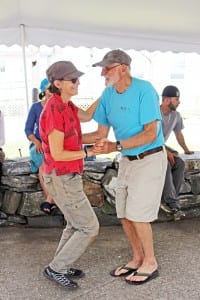
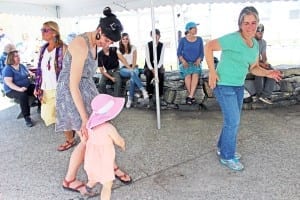
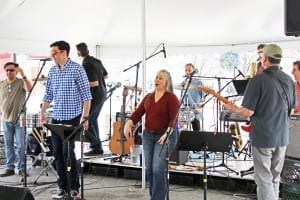
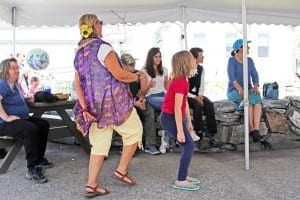
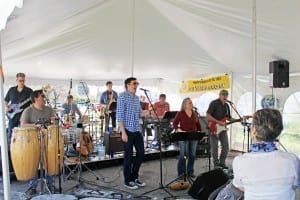
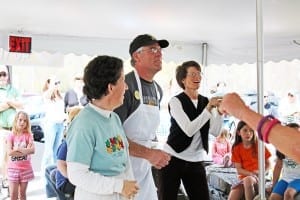
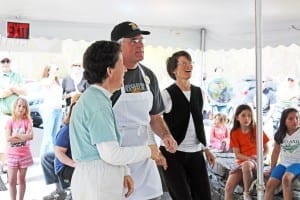
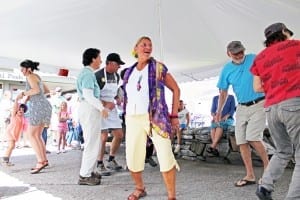
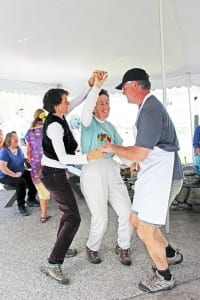
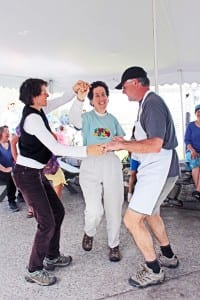
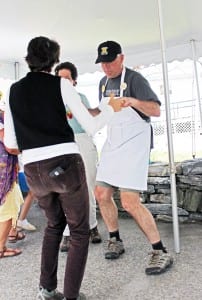
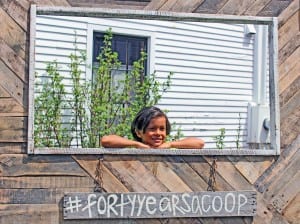
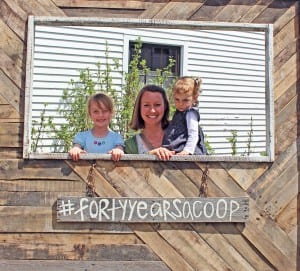
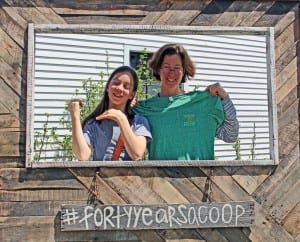
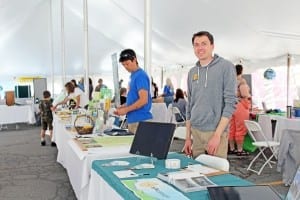
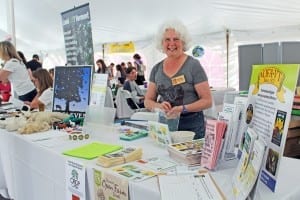
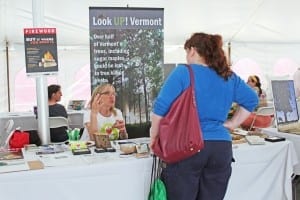
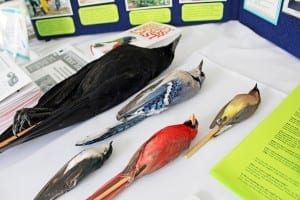
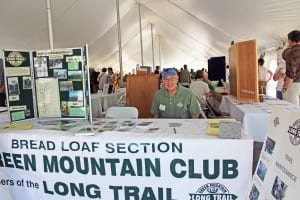
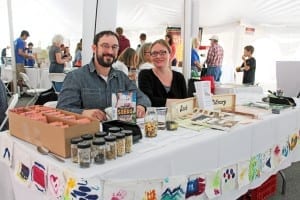
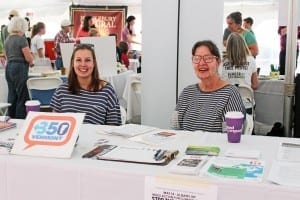
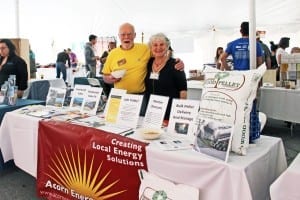
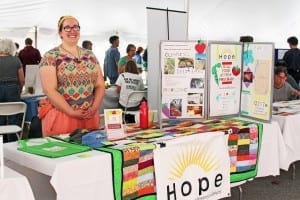
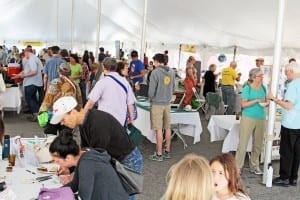
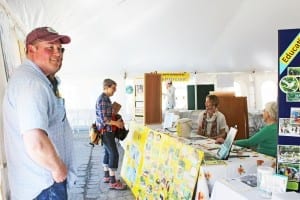
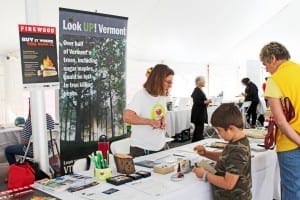
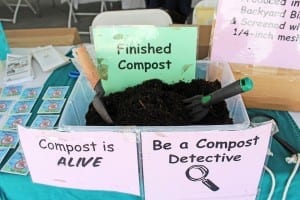
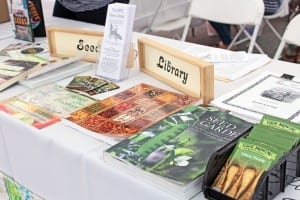
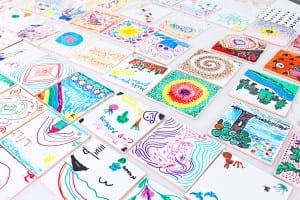
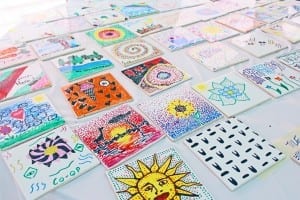
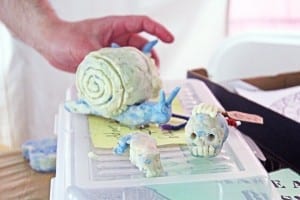
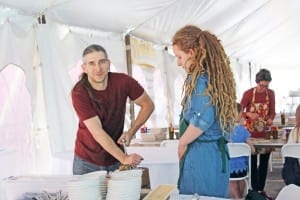
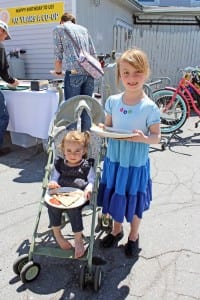
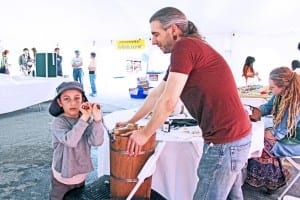
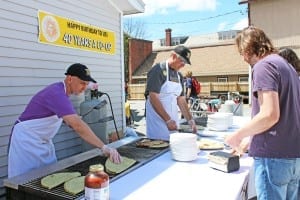
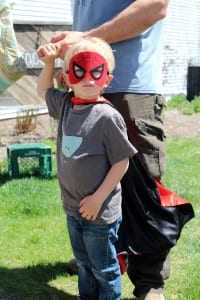
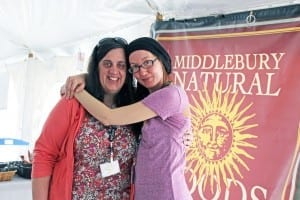
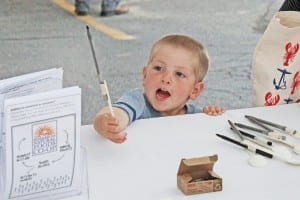
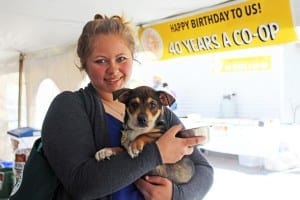
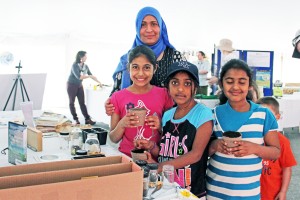
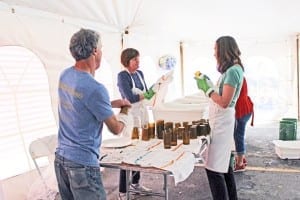
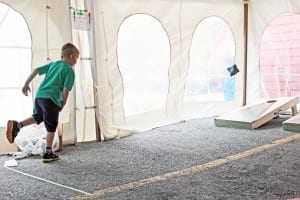
Green Up Fest 2016 is one for the record books! The weather was beautiful, the crowd was lively, the music was fantastic, and the food was melt-in-your-mouth delicious! We are so grateful to those of you who joined us on Saturday to celebrate both Green Up Day and our 40th Anniversary. We also want to extend our most sincere gratitude to all of the volunteers, the representatives from over 20 local groups responsible for helping keep our community green, and of course, we must thank the The Doughboys for rocking the plaza all day long! If you had to miss it, here’s a recap of How to Have Fun at Green Up Fest:
Get Your Groove On!
2. Strike a Pose!
3. Learn All About the Local Organizations that Help Keep Addison County Green!
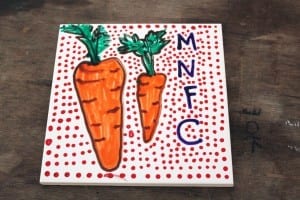
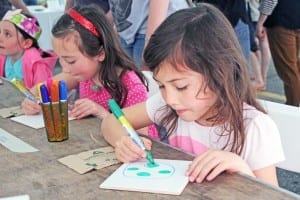
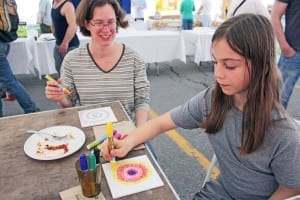
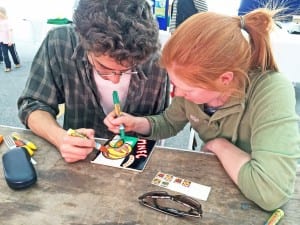
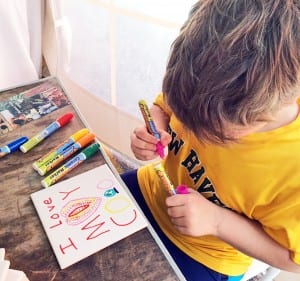
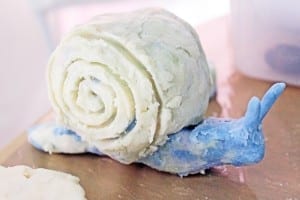
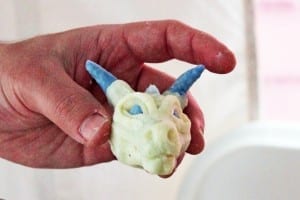
4. Get Crafty! Paint a Tile for the New Co-op Bathroom, Then Make a Soapy Creation with Vermont Soap Sudsy Putty!
We’re casting our Member Deals spotlight on Burt’s Bees this week to shed a little light on the wonderful things they’re doing to protect and maintain healthy pollinator populations through their Wild For Bees initiative. Member-owners can enjoy 30% off all Burt’s Bees products this week – just in time for Mother’s Day! Read on to learn about the history of Burt’s Bees, their products, their environmentally-friendly practices, and their efforts to save our pollinators:
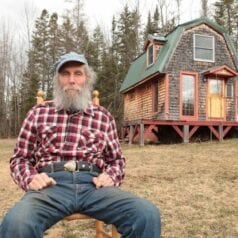
It all began in the summer of ’84 when Maine artist Roxanne Quimby met Beekeeper Burt Shavitz. Roxanne was attempting to thumb a ride home and was picked up by Burt, who she immediately recognized as the bearded beekeeper who often sold honey on the roadside out of his iconic bright yellow Datsun pickup. The two hit it off, and before long, Burt was selling beeswax candles alongside his honey. Fast-forward more than 30 years, and Burt’s Bees now offers some 200 different products! Through the years of growth and evolution as a company, Burt’s Bees has remained true to a simple idea: what you put on your body should be made from the best nature has to offer.
In addition to providing earth-friendly health, beauty, and personal care products, Burt’s Bees is also committed to supporting projects and research at the intersection of bee and human health. One such project is the Wild For Bees initiative. Here’s what Burt’s Bees has to say about this series of projects:
We all know that honeybees make a lot more than wax and that they are connected with several critical issues for human and environmental health, including biodiversity, food security, nutrition, and sustainable land use. We rely on bees for nearly 1/3 of our entire food supply. Not to mention all the fibers, spices and medicines the plants they pollinate make possible. A world without bees is unimaginable and we won’t let it happen. We support our buzzing friends with many wonderful projects that promote honeybee health and sustainable agriculture. We are also continually improving our sourcing process, so that eventually each and every one of our ingredients, pollinated or not, will be vetted and accounted for.
Our efforts to support pollinator health have spanned research, education and conservation; over the years, we’ve supported a number of community organizations working for change at the intersection of human and honeybee health, awarded over 30 pollinator health research grants, and worked to drive awareness of the plight of honeybees and how individuals can help.
Of these efforts, our recent focus has been on establishing habitat, providing bees with a much-needed feast. By 2020, Burt’s Bees aims to impact 10,000 acres of healthy honeybee forage. To date, our work and committed funds have already impacted 6,600 acres of pollinator forage. Bur there’s more to do. One campaign helping establish habitat is the Bring Back The Bees program. The goal of this program is to plant 1 billion wildflowers adjacent to farms to provide bees a nutritious and much needed feast, and they need your help to reach this goal:
In addition to their extensive work to raise awareness and support for pollinator health, Burt’s Bees has also taken some impressive steps to ensure that their products and processes are earth-friendly. Here’s what they have to say about their operational footprint:
Have you ever seen a bee’s footprint? Neither have we. All those little gals do is fly from here to there, getting pollen all over everything as they quest for the perfect building material. But they take only what they need—and they leave their environment better than the way they found it.
At Burt’s Bees, we take our cue from nature. We’ve committed ourselves to making the world a little greener, a little cleaner, by doing what bees do best: working hard on natural products that people love.
That’s why, for example, we’ve committed ourselves to a policy of sending zero waste to landfill. With over 350 employees in three facilities, not a single piece of garbage goes to the dump. Not one. Really. How? Each month, our employees diligently volunteer to check over 200 recycling, composting, and waste to energy bins, ensuring everything is sorted properly.
We also encourage you to take advantage of our Recycle on Us Mail Back Program, which keeps the tubes and containers from your favorite Burt’s Bees lip products out of landfills and back into good use.
We’re also serious about energy use. We know that our purchased electricity is the largest contributor to our carbon footprint—so we’ve outfitted our facilities with energy-efficient lighting, resource management software, and efficient production equipment. Our conscientious employees look for ways to save energy and water. And we’re focusing more on the impact of our supply chain, including contract manufacturers.
But we also know that, as our brand has grown, so has our water usage, jeopardizing our 2020 sustainability goals. That’s not good enough for us. In the face of global freshwater scarcity and limited nonrenewable energy sources, it’s more important than ever to take only what we need.
So, until we can be fossil fuel free and water neutral, we’re offsetting our environmental impact in other ways
Purchased Water Restoration Certificates from the Bonneville Environmental Foundation, returning millions of gallons of water—the equivalent of our own consumption—to watersheds like the Colorado River.
There’s still much to be done, but we’re determined to get there. Because we’re not just creating a better world for ourselves—we’re also doing it for the little yellow and black pollinators who live in harmony with nature, and to whom we owe so much.
“What’s right isn’t always popular. What’s popular isn’t always right.” Wise words from one of our first catalogs, published over 20 years ago. It’s wisdom that continues to inspire us today, and it’s why we do things a little differently around here. No trash cans at our desks, for example. We like a little yoga with lunch. We speak our minds. We help our neighbors. In short, we practice what we preach.
That’s why we encourage our employees to take time off to go do something good for the world. It’s why, each year, we hold a Culture Day to promote community outreach—in the past we’ve planted urban gardens and built hive boxes for the recovering bee population. We encourage wellness through weekly onsite yoga. And through the Greater Good Team, we strive to maintain environmentally friendly practices within our company and alongside our partners.
We’re basically a bunch of hands-on, tree-hugging, greased elbow do-gooders. It’s kind of what makes our company special. We think the bees would agree.