All posts by: coop-admin

Spotlight on Lake Champlain Chocolates

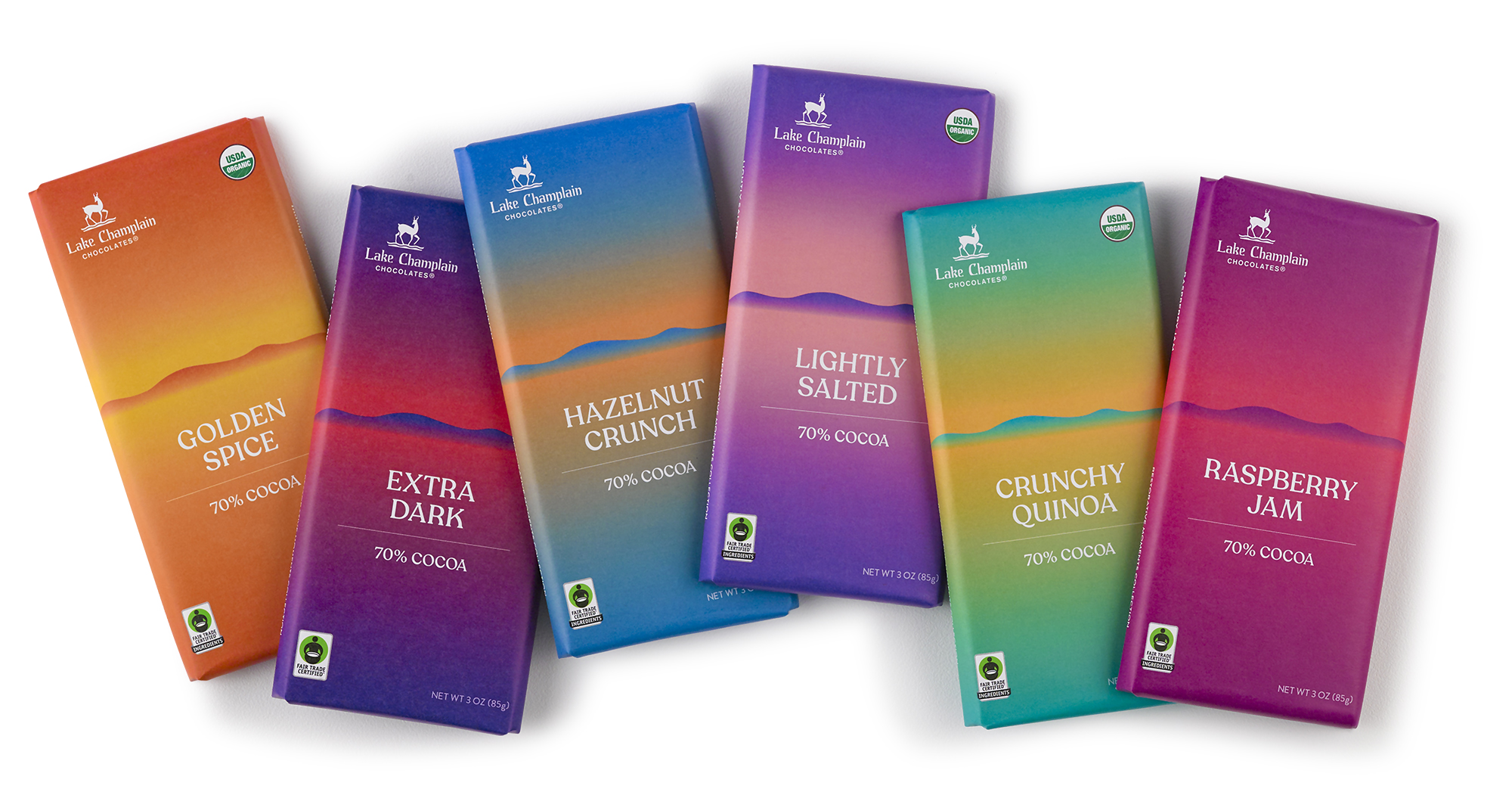
Just in time for Valentine’s day, this month we’re casting our Co-op Spotlight on a local favorite – Lake Champlain Chocolates! All of their mouth-watering chocolates are 20% off for member-owners from February 4-10. Read on to learn more about this local confectionery that has called Vermont home for 40 years.
lc-logo-brown-300-dpi

History:

The story of Lake Champlain Chocolates began in 1983, when founder Jim Lampman dared the pastry chef at Burlington’s Ice House Restaurant to create a better truffle than the ones he had been buying as holiday gifts for his staff. Together, they began making hand-rolled, creamy truffles that quickly stood apart—and the rest, as they say, is history.
Sourcing Matters:

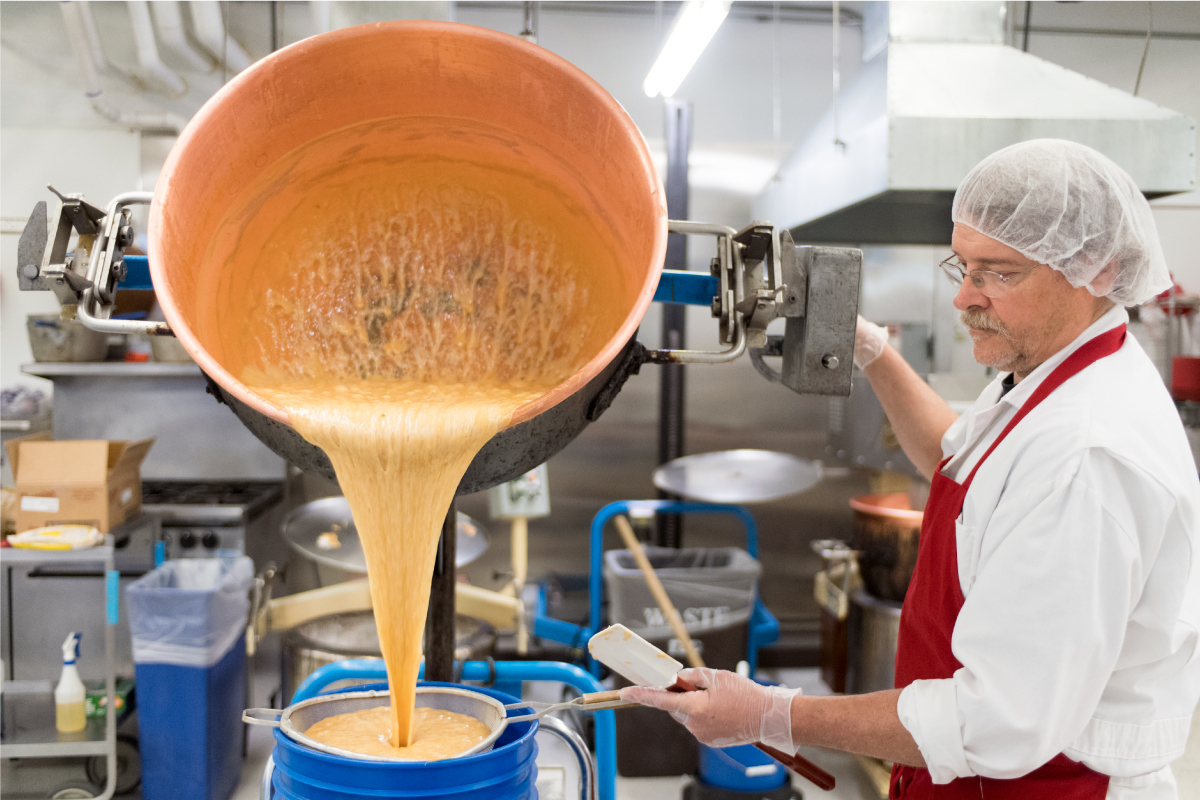
From the very beginning—long before “eating local” was a common refrain—Lake Champlain Chocolates has been committed to sourcing Vermont-grown ingredients whenever possible. They understood early on that using high-quality Vermont honey, maple syrup, and fresh dairy from local farmers and producers would lead to better chocolate, plain and simple.

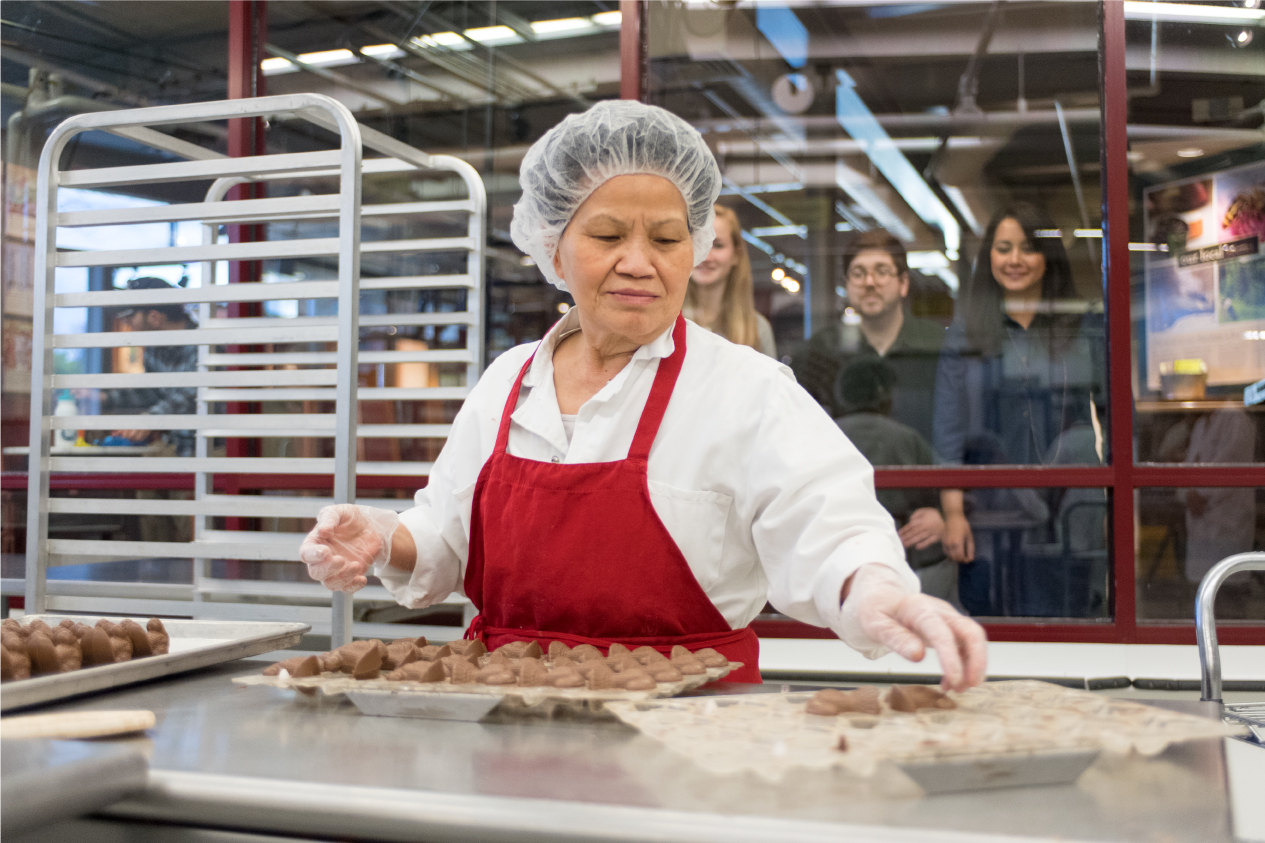
The goal has always been to bring you their best: chocolate that amazes with exquisite flavor and creates a moment of pure joy. That commitment is why they’ve never added preservatives, extenders, or unnecessary additives, and why they’ve worked diligently to remove GMOs from all of their chocolates while using organic and Fairtrade-certified ingredients whenever possible. With each new product, the goal remains the same—to create something special and offer the best possible experience.
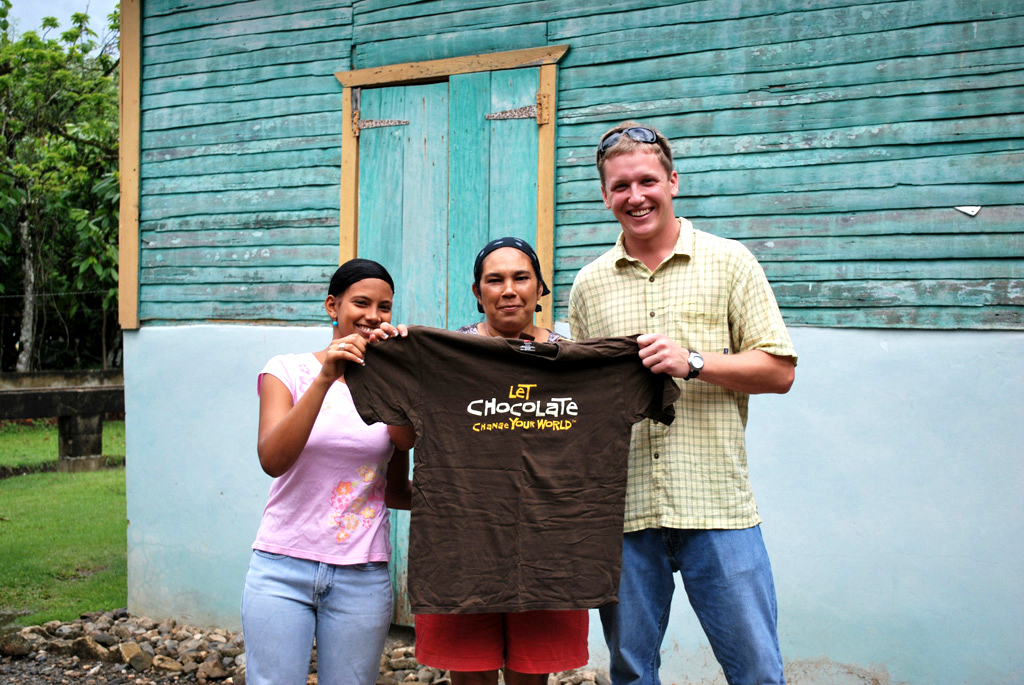
Eric Lampman in the Dominican Republic

A Family Affair:

Lake Champlain Chocolates is a second-generation, family-owned business—much like the Vermont family farms that supply them with butter, cream, maple syrup, and honey. The same is true of the generations of cacao farmers in places like the Dominican Republic and Guatemala, with whom they maintain direct partnerships.

Today, Jim’s son and daughter, Eric and Ellen, are shaping the future of Lake Champlain Chocolates by developing award-winning organic products and leading sustainable sourcing initiatives. Along the way, they continue to follow the Lampman family principles: dare to do better, always do it with passion, and do it your way.
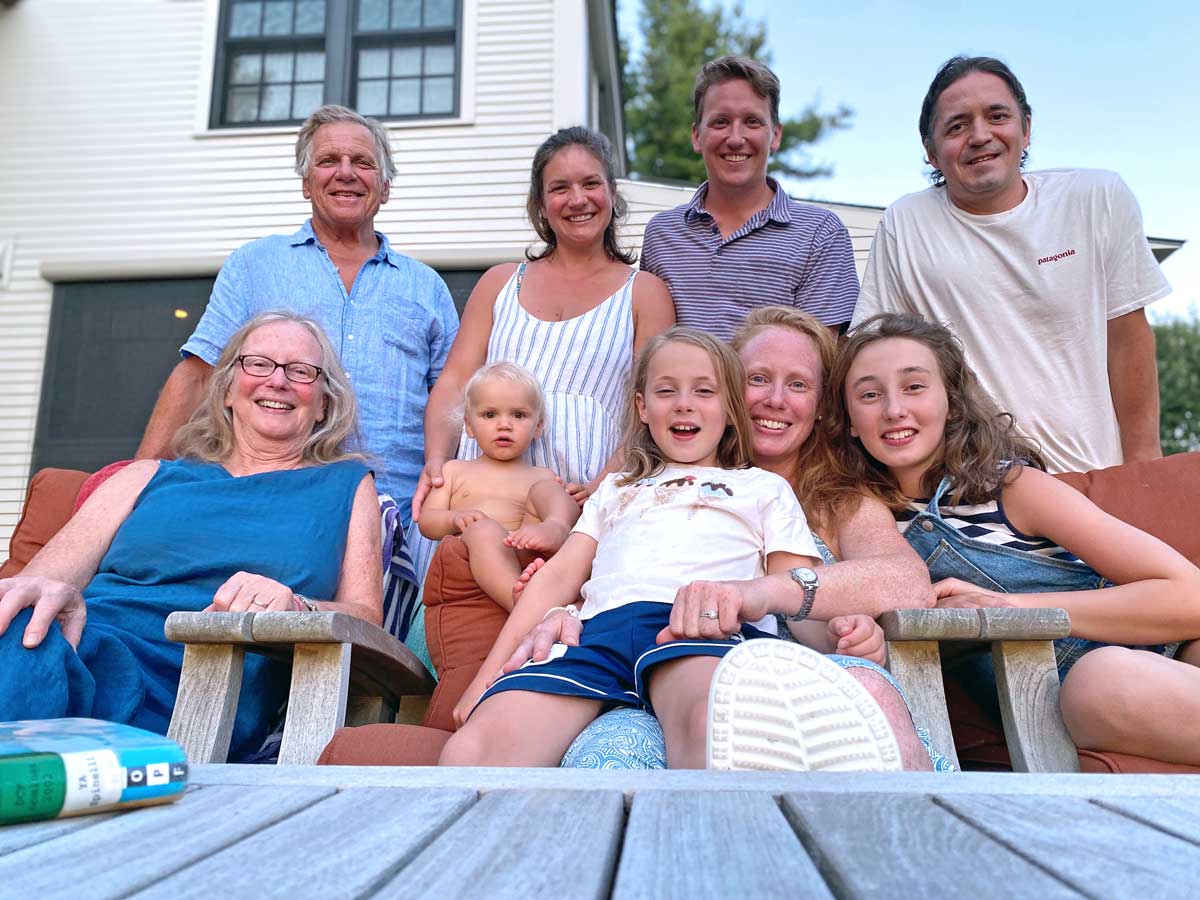
The Lampman Family

Fairtrade:

Making great-tasting chocolate is hard work, and the team at Lake Champlain Chocolates believes that everyone involved in the process deserves to be treated and compensated fairly—and that their work should have a positive impact on both local and global communities.

When you purchase Fairtrade-certified chocolate, more money goes directly back to farmers, helping them lift themselves out of poverty and build better lives for their families. Fairtrade certification also provides additional premiums for community development, prohibits forced and child labor, and supports environmentally sustainable farming practices. You can indulge your sweet tooth knowing that 100% of the chocolate used by Lake Champlain Chocolates is Fairtrade certified.

Why Buy Fairtrade Certified Chocolate?

  • Farmers and workers are justly compensated and provided safe working conditions, including protections against forced and child labor.

  • Farmers are empowered to build sustainable businesses that strengthen their communities.

  • Cocoa farmers and cooperatives receive additional Fairtrade premiums to invest in community development.

  • Farming communities gain skills to better participate in—and benefit from—the free market.

  • Farming villages become stronger stewards of the environment by using sustainable practices that protect habitats and increase biodiversity.
 

B Corp Certification:

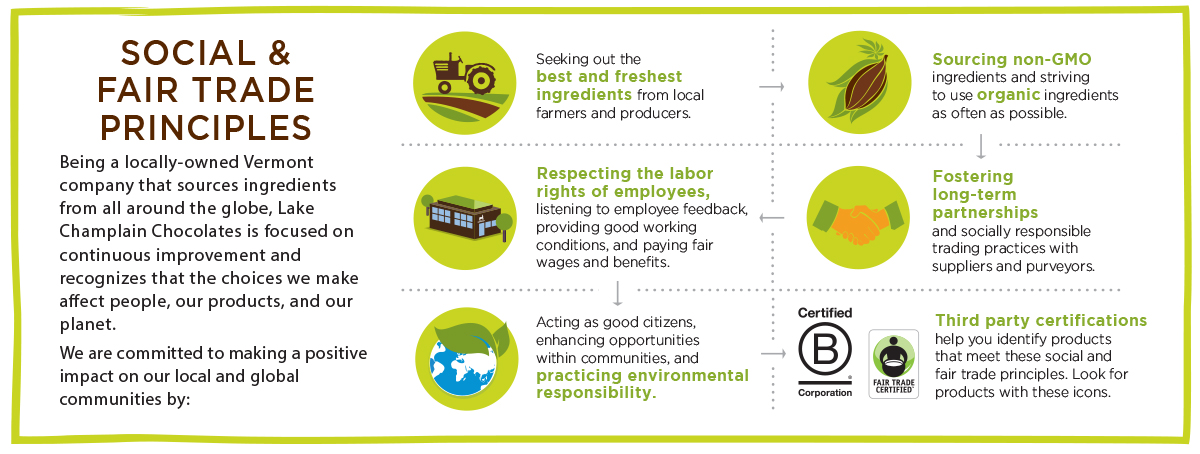
Lake Champlain Chocolates joined a growing global community of more than 2,500 certified B Corporations united by a shared goal: redefining what success in business looks like. Rather than focusing solely on profit, certified B Corporations are part of a worldwide movement using business as a force for good. They meet rigorous standards for social and environmental performance, transparency, and accountability, and commit to using the power of business to help address social and environmental challenges.

Unlike certifications that focus on individual products, B Corporation certification evaluates the entire business—assessing annual impact across the environment, workers, customers, community, and governance. This purpose-driven model is designed to create benefits for all stakeholders, not just shareholders.

For Lake Champlain Chocolates, these performance standards offer a meaningful third-party measure, assuring customers and suppliers that their business practices meet the highest standards. “Achieving B Corp Certification is the next step toward fulfilling our vision of becoming the gold standard of chocolate companies in the United States—a respected leader other companies aspire to be,” says Eric Lampman, President of Lake Champlain Chocolates. “For more than 35 years, our practices have been guided by one core value: everything must measure up to the chocolate. That includes making a positive impact on our local and global communities by respecting our employees, building long-term partnerships with our suppliers, and practicing environmental responsibility.”


Featured Co-op Connection Business – Otter Creek Yoga

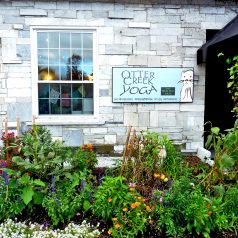
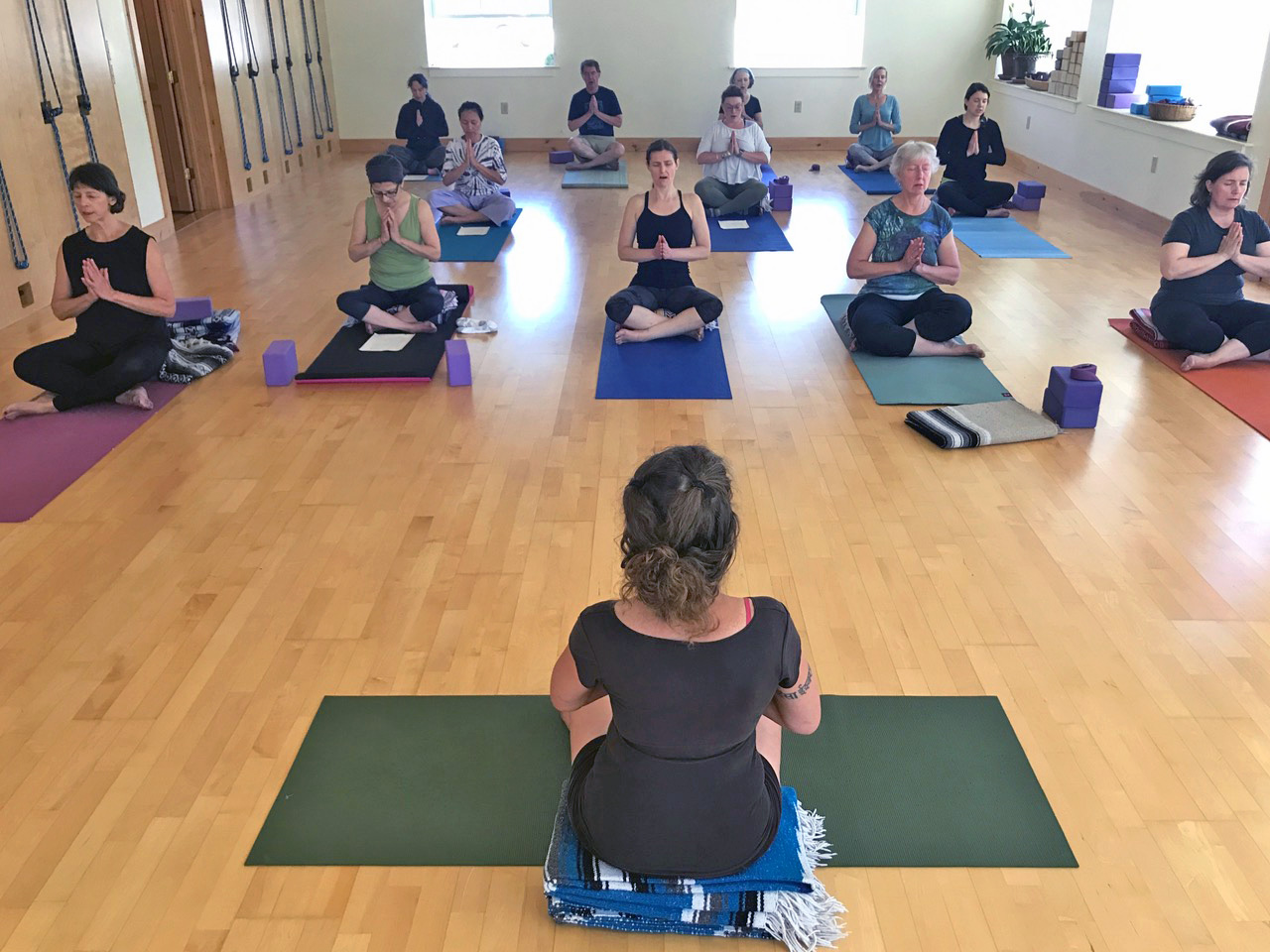
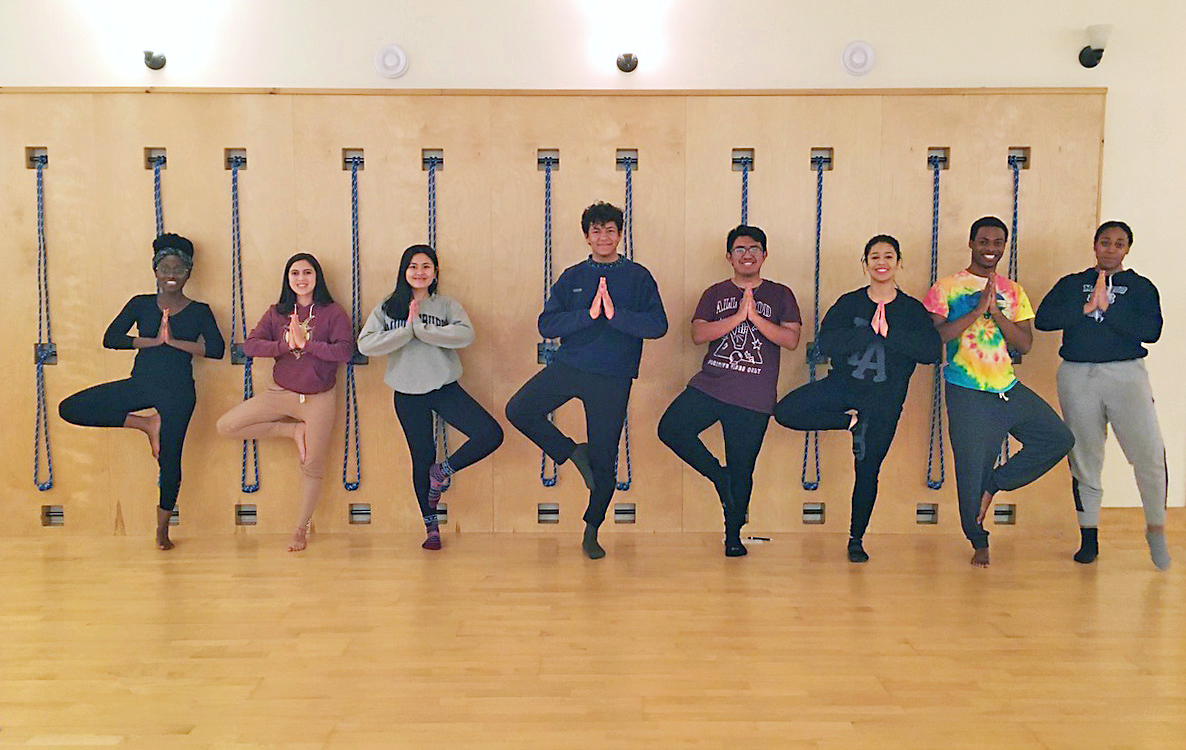
Carrying the weight of the world in your neck and shoulders? Craving a moment to breathe and reconnect? Otter Creek Yoga, this month’s Co-op Connection featured business, is here to help. Co-op member-owners enjoy their first class free—just let them know you’re a member!


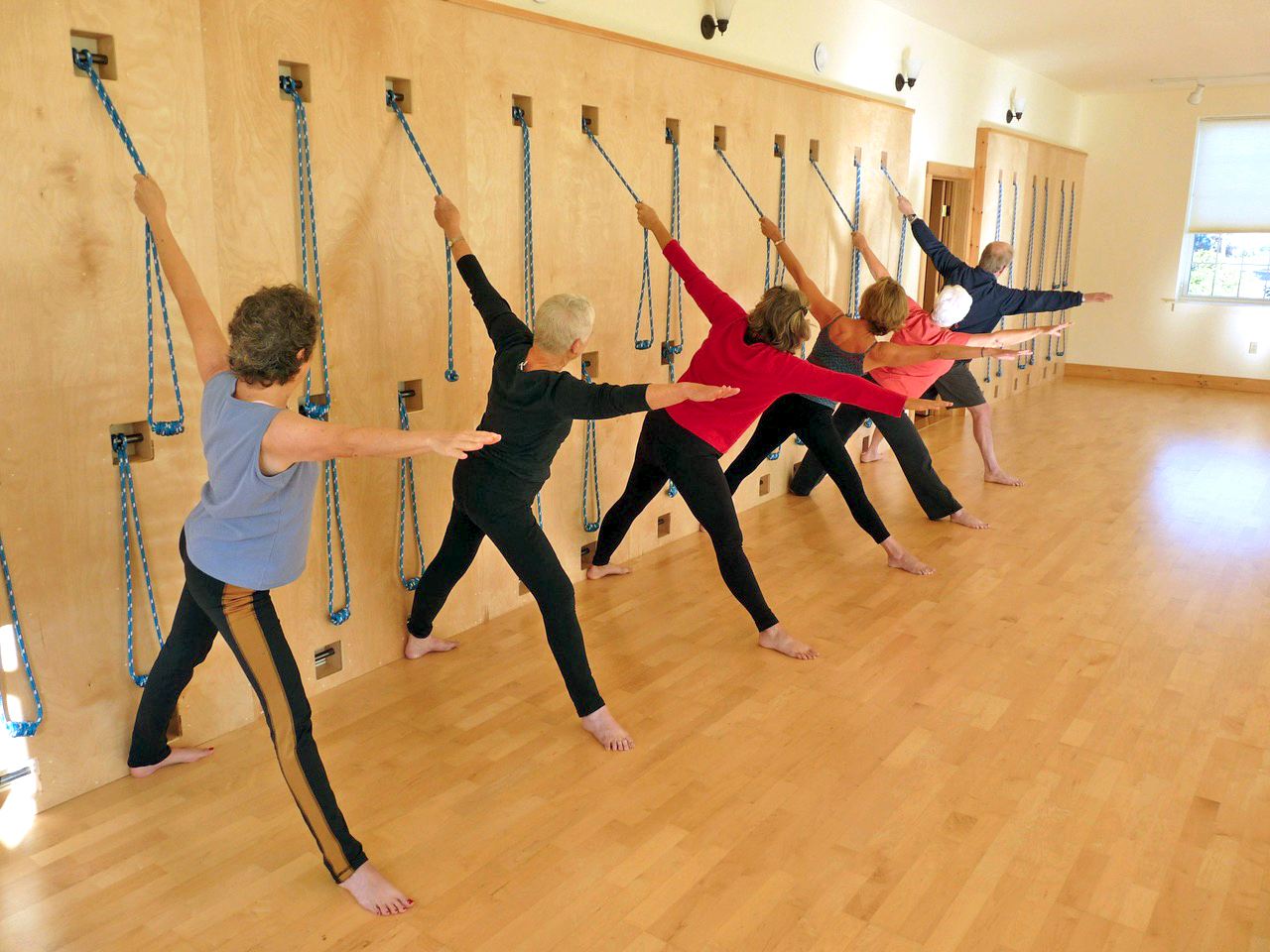
For over 20 years, Otter Creek Yoga has been a cornerstone of healing and self-discovery in Addison County. As the area’s first yoga studio, they continue to offer a peaceful space for relaxation and growth. Located in Middlebury’s historic Marbleworks, their bright, serene studio hosts classes throughout the day, evening, and weekends for all levels of experience—no prior yoga experience required.

Their dedicated team of seven certified instructors, led by founder and director Joanna Colwell, teaches a range of yoga styles to fit different needs. If you’re unsure where to start, send them an e-mail or give them a call—they’re happy to help guide you to the right class. Or explore on your own; click here to explore the schedule and class descriptions. 

Otter Creek Yoga is also deeply committed to accessibility and inclusion. Through their Yoga Equity Project,  individuals who are part of the global majority (BIPOC) can access free yoga classes or even receive compensation for attending. This eight-week Gentle Yoga Series, led by Sasha Finnell, fosters an inclusive and nurturing environment designed for comfort, healing, and community.

To learn more or register for the series, reach out to Joanna directly.

Whether you’re new to yoga or a long-time practitioner, Otter Creek Yoga welcomes you to reconnect with yourself and your community.

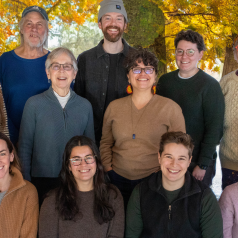
MNFC board in front of fall foliage

Why I Serve: MNFC Board Members Share Their Stories

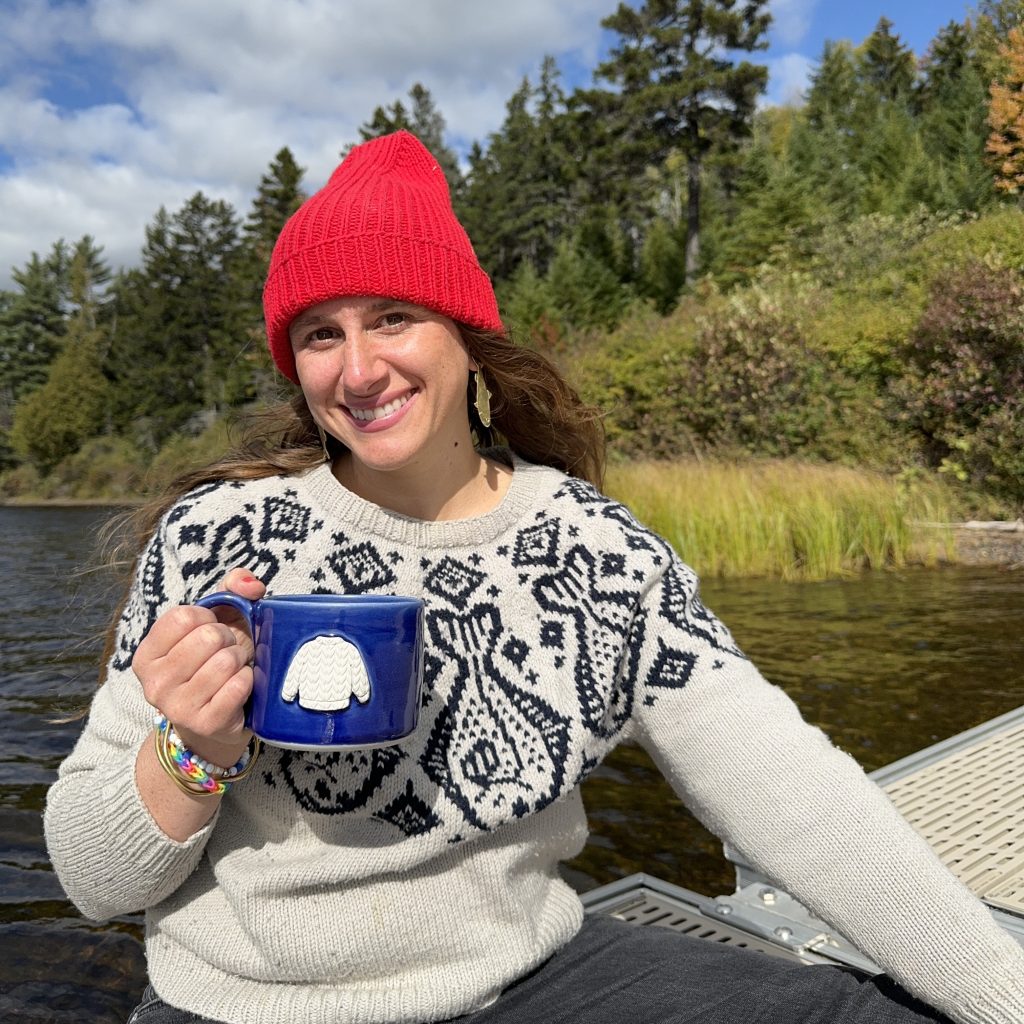
Amanda Warren

Why I serve on the Board: We are all familiar with the refrain “voting with your dollars.” I spend my money at the Co-op because I believe in this idea, and I choose to be a member of the Board of Directors because I similarly believe in the concept of “voting with your time.” Each time I engage in Board work, I am grateful for how this model of ownership and governance is different from conventional grocery stores–our Co-op exists to benefit our community, and recirculate wealth, rather than the traditional model of extracting wealth to benefit a small number of shareholders. This is remarkable. 

My favorite co-op item: Bonté Bakery’s olive & rosemary bread

 About me: Much of my days revolve around planning and cooking meals for my seven year old and four year old twins! When I’m not cooking and eating, I love knitting, gardening and fly-fishing. I also own and operate my own business selling my handmade pottery.


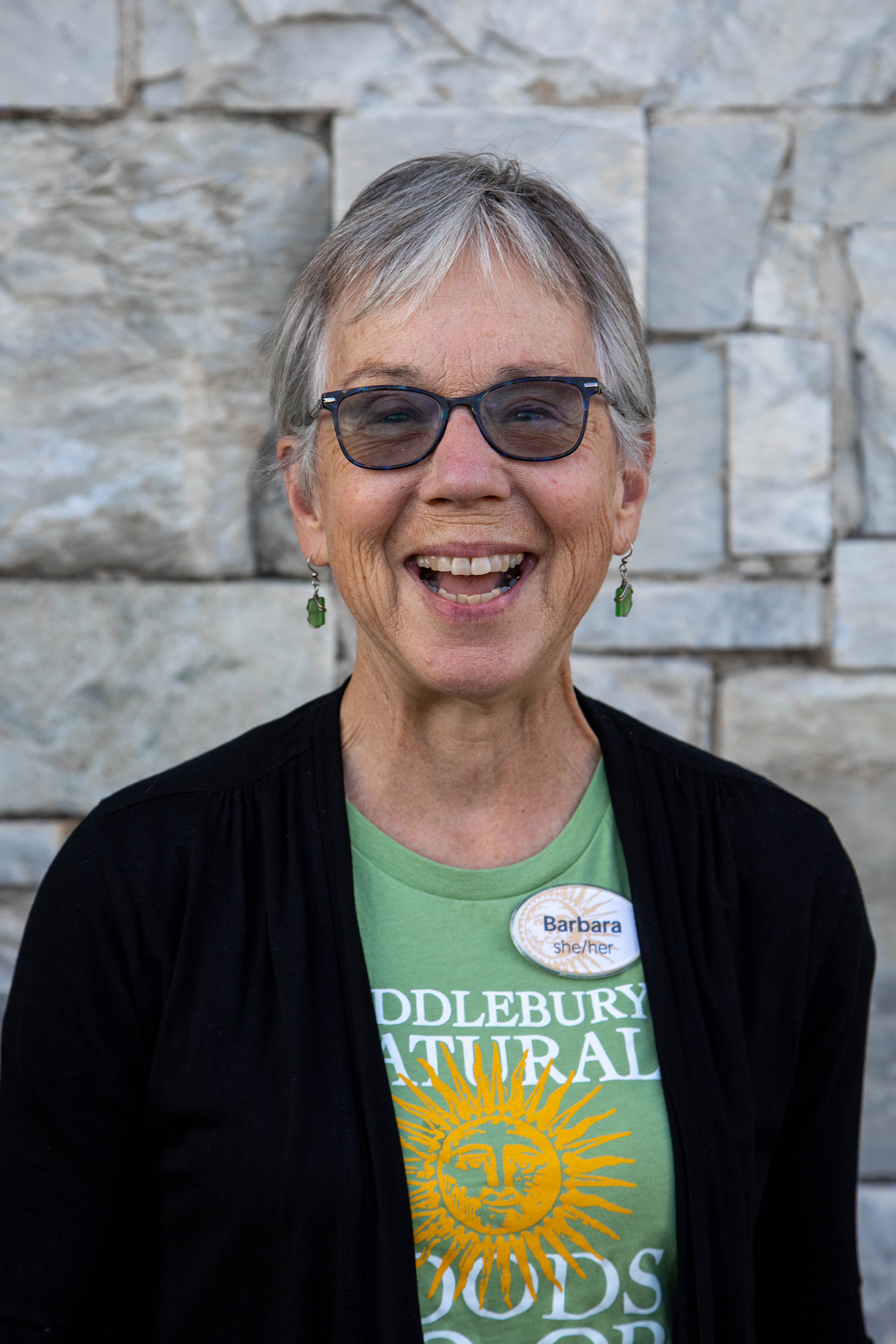
Barbara Hofer

Why I serve on the board: Co-ops serve as a place to put our values into action, and I care deeply about “food for people, not for profit,” the guiding slogan of early food co-ops – and appreciate that whatever profit we do make goes back into the community and not to a corporate headquarters. I feel fortunate to be able to work with such caring and engaged board members and the General Manager to represent member owners in ensuring that the organization is living up to our guiding principles. My favorite Co-op item: I don’t think of the co-op in regard to specific items as much as I do in regard to the experience of shopping there! I deeply appreciate the way the staff make everyone welcome and how knowledgeable and helpful they are, and I love the spontaneous conversations with people I might not see otherwise, as well as the discovery of new products and the delight of old favorites. 

About me: A MNFC member since I moved to Middlebury in 1998, I’m a sometimes retired psychology professor. I research, write, and speak about science denial and what to do about it. I enjoy running, biking, hiking, yoga, traveling, and spending time with my twin grandsons. 


Caroline Corrente

Why I serve: MNFC is not just a place to buy healthy & delicious food – it is a vital part of our community and local economy. I am lucky enough to have firsthand experience selling my product through the Co-op. When I started out, the employees showed me guidance and patience, and put faith in my food. This is what the Co-op does: it constantly supports our local farmers, makers, and producers;  amplifies the voices of those doing good work; and fosters a sense of community–all while investing money and resources back into our local economy. I feel compelled to serve on the Board of Directors to augment the impact and reach of the Co-op’s community engagement and local economic development.

Favorite coop item: So many to choose from! Yalla hummus, Downhill Bread, Jasper Hill’s Harbison cheese (preferably all at the same time). Followed by their peanut butter covered pretzels. 

About me: My life revolves around good food. I own Haymaker Bun Company in Middlebury & Burlington. I spend most of my time thinking about what to put on menus, what produce is in season, what bun flavor combinations sound good, and what’s for dinner. When I am not thinking about food I am probably walking my dog, riding my bike, xc skiing, or spending time with my husband & two sons at our home in Middlebury. 


Caryne Eskridge 

Why I serve on the Board: I find the Co-op’s community ownership model a powerful and compelling way to meet communal needs and share power. As a pastor and mental health worker, I spend a lot of time working with others toward wholeness and justice. I believe that healthier, stronger communities are essential, and our Co-op is part of that strength and cooperation. I love serving on the Board because I get to work with a fantastic team of people to keep our Co-op strong and I get to learn about our vibrant local food system along the way. A win-win!

My favorite co-op item: My top three favorites right now are: Downhill Bread Fennel Sesame Sourdough, Blue Ledge Farm Camembrie, and the Co-op made Chocolate Pudding 

About me: I have (unintentionally) lived in 4 places in a row that start with “New:” Newport RI, New Orleans LA, New Haven CT and now New Haven VT. My favorite things are cooking,  eating, hanging out with my dog Sammy, spending time with my partner and with friends, mountain-biking, and playing games and puzzles. 


Cody Mears

Why I serve on the board: In my experience Middlebury Natural Foods Co-op has been a place of constant community and connection. It plays a key role in our local food system, supporting hundreds of Vermont’s producers. Whether I’m helping out with a delivery for my wife’s family’s farm or just heading in to pick up some groceries, I always value my time spent at the Co-op. I serve on the Board of Directors to foster a closer connection to the Co-op, our food system and the member community.    

My favorite co-op item: Golden Russet Farm produce, polenta sourdough from Downhill Bread, any light roast from Brio Coffeeworks and Aqua ViTea ginger kombucha. 

About me: I’m a lifelong Vermonter with a passion for cooking, baking and turning on my snowboard. I work in marketing for an outdoor clothing company and on my wife’s family’s organic vegetable and flower farm.


Erin Buckwalter 

Why I serve on the board: I believe that a better food and farming system is not only possible, but is critical to our collective thriving future– and I see the Middlebury Co-op as key to this locally. I am grateful for the Co-op and am honored to be able to participate in the democratic processes of our Co-op to support others in keeping more of our dollars and decisions local! 

My favorite co-op item: Wow – I have so many! I almost always leave with an Aqua ViTea Blueberry Social Kombucha and possibly some dolmas too.

About me: I have worked at the Northeast Organic Farming Association of Vermont (NOFA-VT) since 2010 and have a master’s degree in Community Development & Applied Economics. My partner and I live in Starksboro with our two young sons and have a small maple syrup operation.


Ollie Cultrara 

Why I serve on the board: The Co-op is a place where we get to practice leading with our values, and exploring what shared, cooperative leadership can look like. MNFC is a leader in many ways in consumer co-op governance, and it’s exciting to know that what we are building on a local level can have an impact across the country. Personally, I’ve benefited from training and mentorship that prepared me to become board Treasurer, and I learn a lot by keeping an eye on the Co-op’s and board’s finances.

My favorite co-op item: Every time I get to visit the Co-op (now that I’m based in Massachusetts), I make sure to stock up on Champlain Orchards cider and unscented local soaps. 

About me: I’m happiest cooking and eating with loved ones, giving great hugs, and being outside. I am working as a butcher at a specialty food shop that I sure wish was a co-op! I am grateful for the opportunity to continue serving on the board remotely.


Samantha Langevin

Why I serve on the board: One of my favorite things about Vermont is its genuine and open support for local food.  Local farmers, farm workers, and food producers are all members of our community and the MNFC is an important thread in the web that supports them to feed all of us.  I serve on the co-op board because I care deeply about local food systems and I know the MNFC does as well.  I also serve because I think representation is important, and that our leadership bodies should reflect their communities.  The MNFC is more than just a store (I have city friends that call it “the greatest grocery store on earth”) – It is a statement of our values as a community. 

My favorite co-op item: Cheese.  Even if I’m not buying cheese, I just have to go look.  Which usually means I am buying some. Vault No 5 is worth your time.

 About me: I am the Director of Partnerships & Community for Liberation Ecosystem, an organization that supports Vermonters of Color in Land, Environment, Agriculture, and Foodways.  I live on a small farm in Bristol with my partner, where I am usually found planning a meal, thinking about cake, or reading science fiction.

Business of the Month: Vermont Sun Fitness Centers

Looking for a great way to jump start the new year? Check out Vermont Sun! They’re our featured Co-op Connection Business this month and they offer 50% off their enrollment fee to Co-op member-owners!

Vermont Sun has been keeping our community fit since 1985. Whether you’re visiting their facilities in Middlebury or Vergennes, you’ll find their clubs geared up with the essential elements of a great workout. Their fitness equipment vendors are the best in the industry, and their club owners stay current with the latest technology! They offer a wide variety of cardio, strength, and free weight equipment to ensure that you get the best possible workout.

FACILITIES AND PROGRAMMING

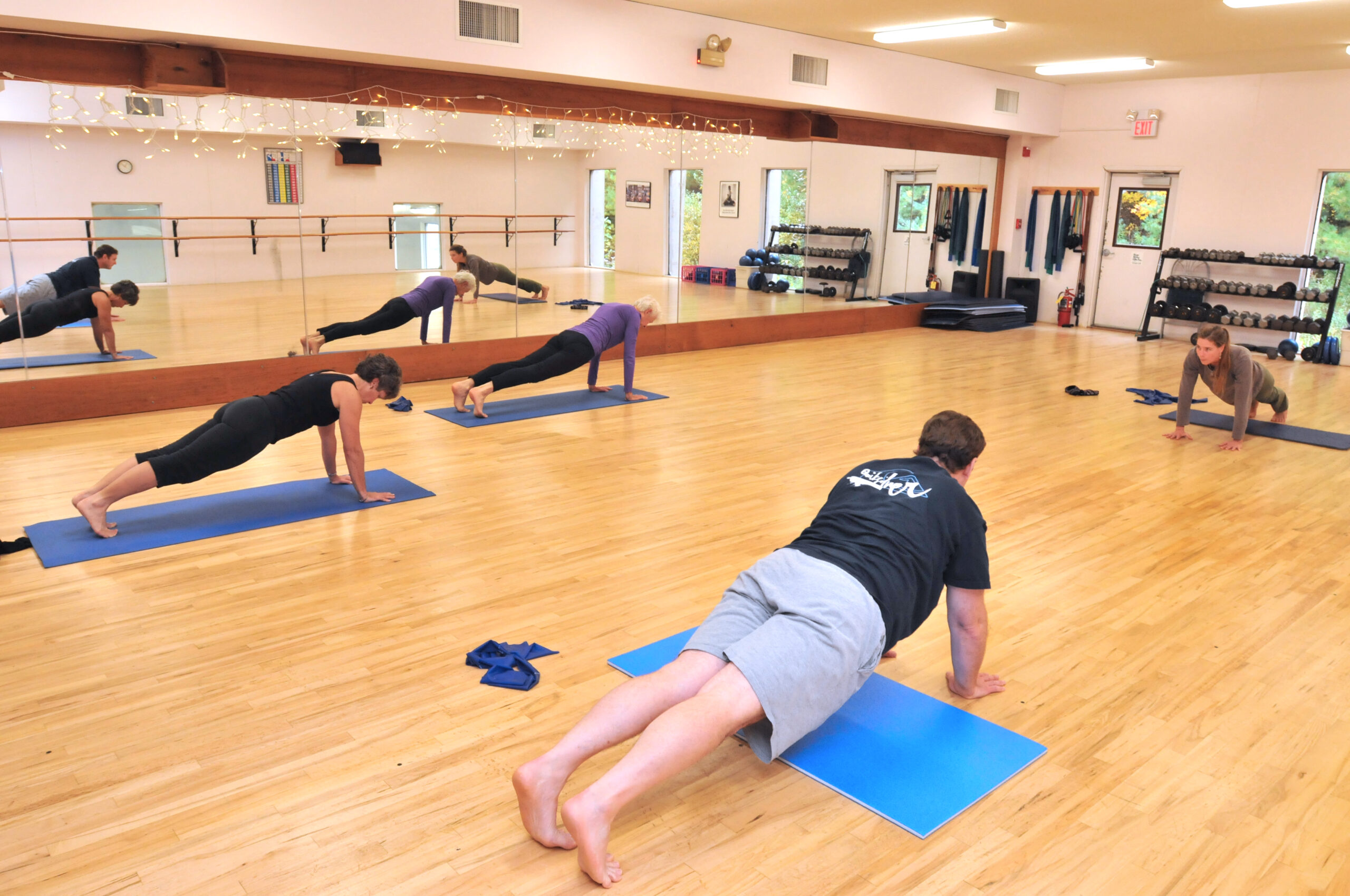
Both Vermont Sun locations are open Monday thru Friday 6 am-8 pm, Saturday & Sunday 7:30 am-4 pm. This includes the pool as well! Vermont Sun’s two thousand square foot exercise room features a cushioned hardwood floor and is fully air-conditioned. Their top of the line sound system provides amazing sound quality for all group fitness classes.  All group fitness classes are included in most memberships at no extra charge. Find their class schedule on their website

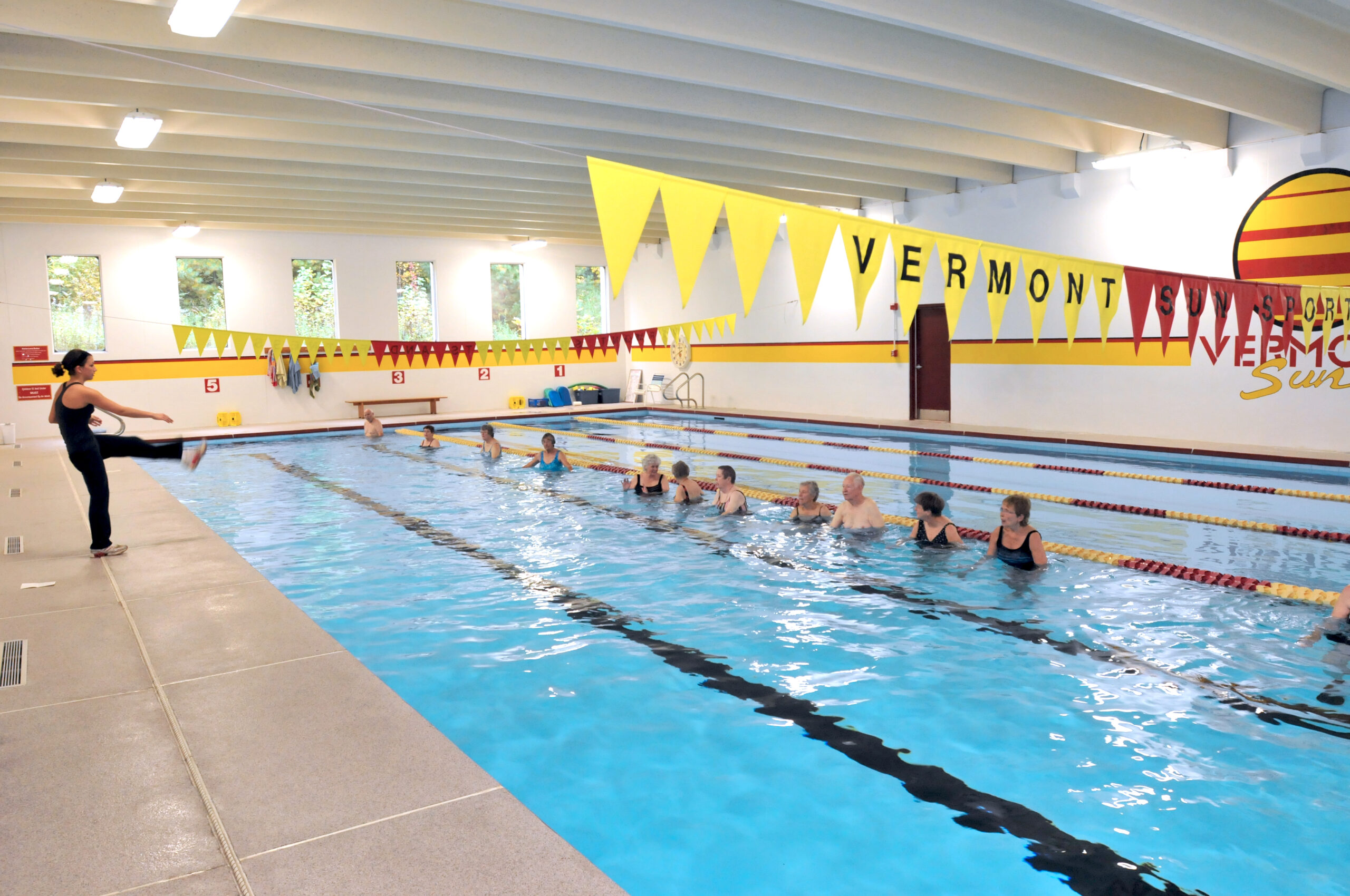
Their facilities also offer racquetball courts, saunas, and indoor pools for lap swimming, rehab, or recreation.

Need help to ease safely back into a workout routine? Or maybe you’re just looking to set some new fitness and nutrition goals and could use a professional guide? Vermont Sun offers Personal Training services and Nutritional Counseling from a knowledgeable staff of certified, credentialed specialists.

In short, Vermont Sun has everything you need to help make your fitness goals a reality! Stop in and find out for yourself why they are voted the #1 Fitness Center in the region year after year! And don’t forget to tell them you’re a Co-op member-owner!


Interested in Getting More Involved in Your Co-op’s Governance? Run for the Board!

Article written by MNFC Board Member Barbara Hofer

Have you loved shopping at the Co-op and think you might want to get more involved and contribute in a meaningful way? I hope you’ll consider running for the Board of Directors. When I participated in a national training for new board members a couple years ago, I learned how fortunate we are to have a co-op that is such a strong, thriving, growing presence in our community. We can’t take this for granted. 

The board is composed of 11 members who are elected to serve three-year terms. The board is currently composed of member-owners who have been Co-op members for different lengths of time. We range in age from the twenties to the seventies, and have varying work-lives as pastor, student, farmer, non-profit and college administrators, butcher, baker (no candlestick makers, as yet!), business owner, sales rep, professor, sled dog driver, ceramicist/ fiber artist. This diversity of backgrounds and skills makes our board stronger. What we have in common is a passion for the Co-op, our democratic principles, and the collaborative processes that guide our work together. No particular expertise is required. 

The board has three primary roles: 1) to represent the 7,000+ member-owners of the Co-op, 2) to oversee and support the General Manager, and 3) to provide strategic and financial oversight for the Co-op. Board members craft and monitor policies that ensure the Co-op is meeting our mission and our ends. We meet monthly, with online conversations and some committee meetings in between. Board members receive a small annual stipend, a 10% discount, and access to professional training.

Each year we are committed to recruiting new board members to bring fresh voices and diverse perspectives to our team. Institutional knowledge from longer serving board members and fresh perspectives from newer board members are equally valuable. Our board strives to be actively anti-racist and inclusive, and we continue to educate ourselves about what that means and how to put it into practice to better serve our members and community. 

There are several opportunities to learn more about the board: 

  • Co-op members are always welcome to attend board meetings, and it’s a great way to see the board in action and to discover if this might be a good fit for you. Prior to the next two meetings we’ll also hold an informal “meet and greet” to answer any questions and to talk a bit about what we do. These board meetings are on Wednesday, February 18, and Wednesday, March 18th from 6:00-8:00pm, with the “meet and greet” session starting at 5:30. If you’d like to attend either meeting, please contact Board President, Amanda Warren, in advance: board@middlebury.coop.
  • We will be holding an Info Session for prospective board members on Zoom, on Thursday, March 12, from 7-8pm. MNFC’s General Manager, Greg Prescott, and I will describe the board’s function, responsibilities, and governing style and answer any  questions. RSVP at bhofer@middlebury by Tuesday, March 10, to receive the Zoom link.

We are always happy to connect with you outside of these meetings, too! If you are interested in learning more about what it’s like to serve on the board, don’t hesitate to reach out to me at bhofer@middlebury.edu or speak with any of the other board members. Applications will be due March 27, with more details about the election and the application process provided in the February newsletter. 

Barbara is Chair of the Board Development Committee.

Spotlight on Joe’s Kitchen

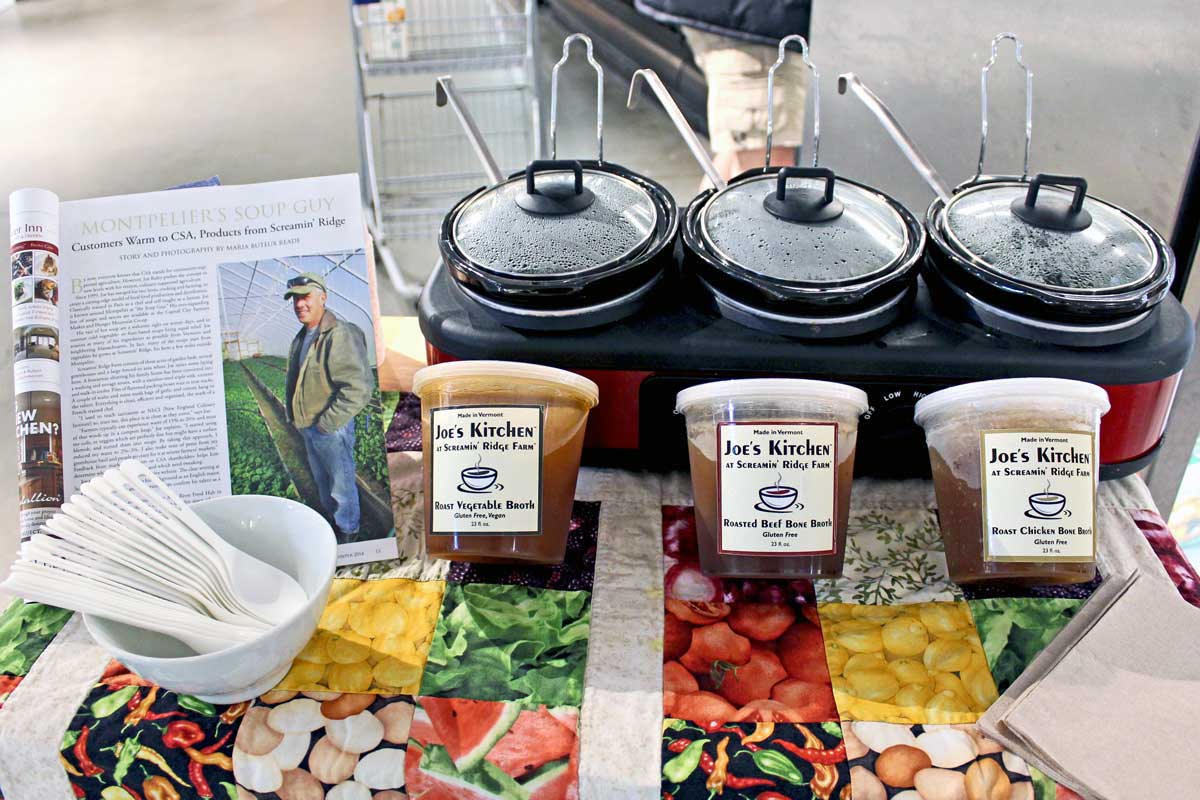
Are you craving the warmth and comfort of a nourishing, home-cooked soup but find yourself short on time? That’s where Joe’s Kitchen soups come in! This week, we’re excited to feature Joe’s Kitchen in our Member Deals Spotlight, with all their locally made, from-scratch soups available at 20% off for Member-Owners from January 21st to 27th.

From Grandma’s Kitchen to Culinary Excellence

Joe Buley’s journey to founding Joe’s Kitchen at Screamin’ Ridge Farm began in his grandmother’s home in East Randolph, Vermont. He recalls her kitchen as a warm, bustling hub filled with family, friends, and the enticing aroma of a soup pot simmering on the stove. His grandmother’s cooking philosophy balanced flavor and economy, often using whatever ingredients were on hand to create hearty, delicious soups. The key to her creations? The fresh vegetables and herbs she harvested straight from her garden.

Joe’s mother carried on this tradition, teaching him the art of making great-tasting food with fresh, home-grown ingredients. These early lessons shaped Joe’s passion for cooking and laid the foundation for his future career.

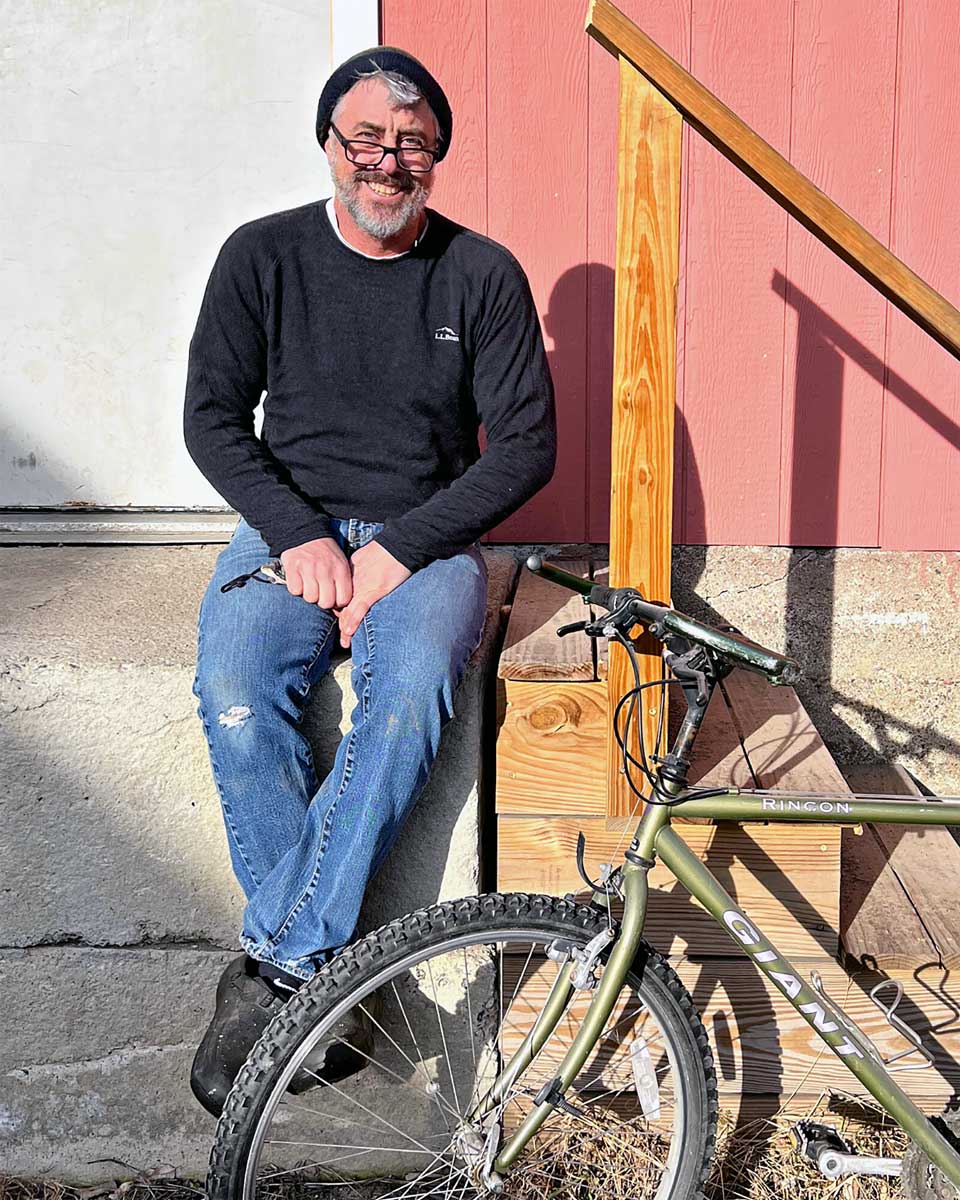
Chef-Owner Joe Buley

A Culinary Journey

Joe’s culinary career took him far and wide. He trained at the prestigious École Supérieure de Cuisine Française in Paris (also known as École Ferrandi), where he was the only U.S. citizen in his class. After graduating, Joe honed his skills in culinary hotspots like Brooklyn, San Francisco, San Diego, and Austin before returning with his family to Vermont in 1999. Back home, he served as a chef-instructor at the New England Culinary Institute for nearly a decade.

During this time, Joe began growing his own food, inspired by memories of his grandmother’s garden. What started as a small operation with a single greenhouse and a walk-behind tractor evolved into Screamin’ Ridge Farm—a thriving business known for its winter spinach and a wide variety of summer crops. The farm’s produce was sold at the Montpelier Farmers Market and through seasonal CSA programs.

Bridging the Gap Between Farm and Table

As Joe connected with customers at farmers markets and through the CSA, he noticed a common challenge: people wanted to eat healthy meals but often lacked the time or inspiration to cook from scratch. This realization sparked the idea for Joe’s Kitchen at Screamin’ Ridge Farm, where he could combine his passion for growing ingredients and cooking them into flavorful, ready-to-eat foods.

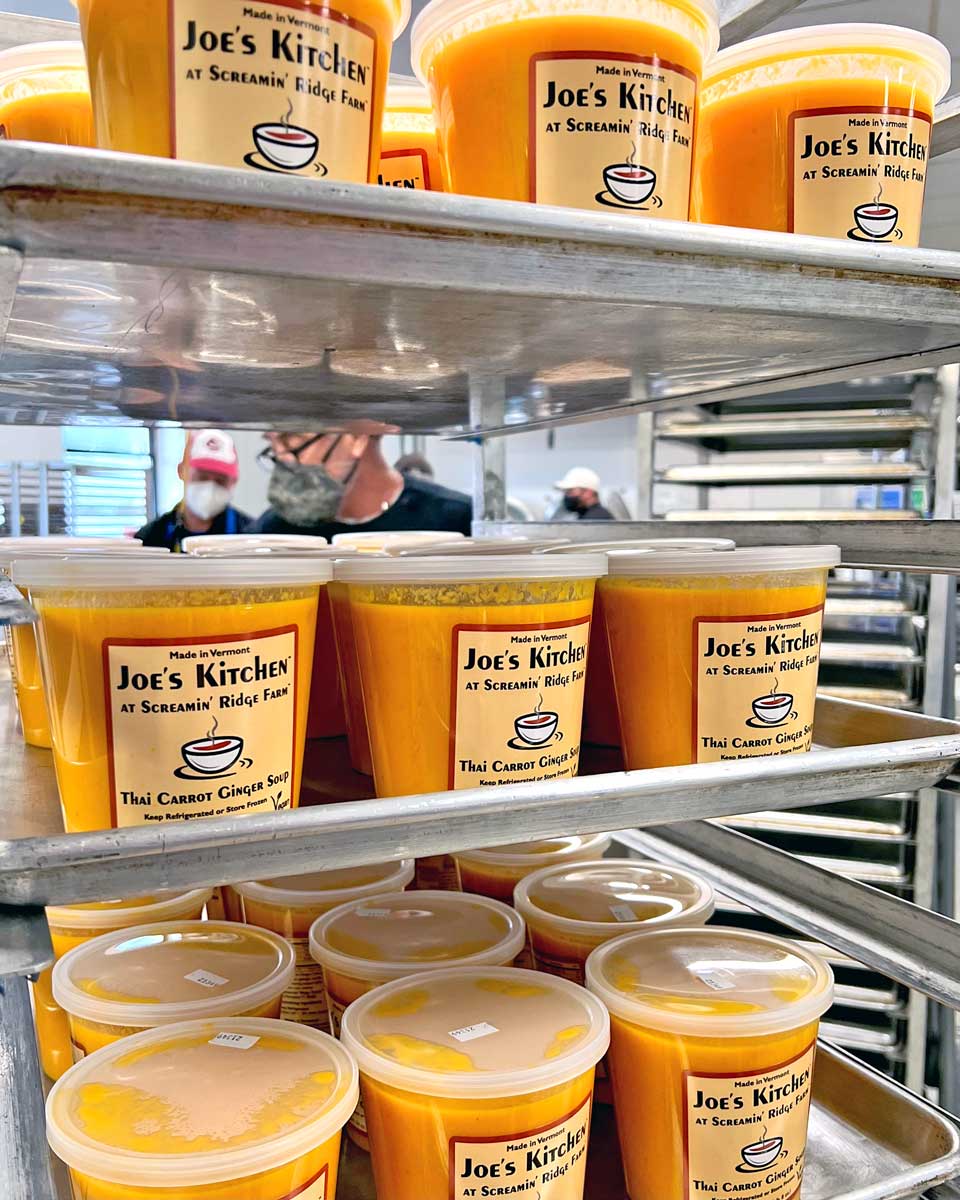
Joe’s soups are crafted with integrity and a commitment to using local ingredients. When sourcing items not grown on his own farm, Joe partners with neighboring small farms in the Montpelier area. This approach not only supports Vermont’s working landscape but also ensures that his soups have the authentic, fresh flavors reminiscent of his grandmother’s cooking—all without the need for added sugars or excessive salt.

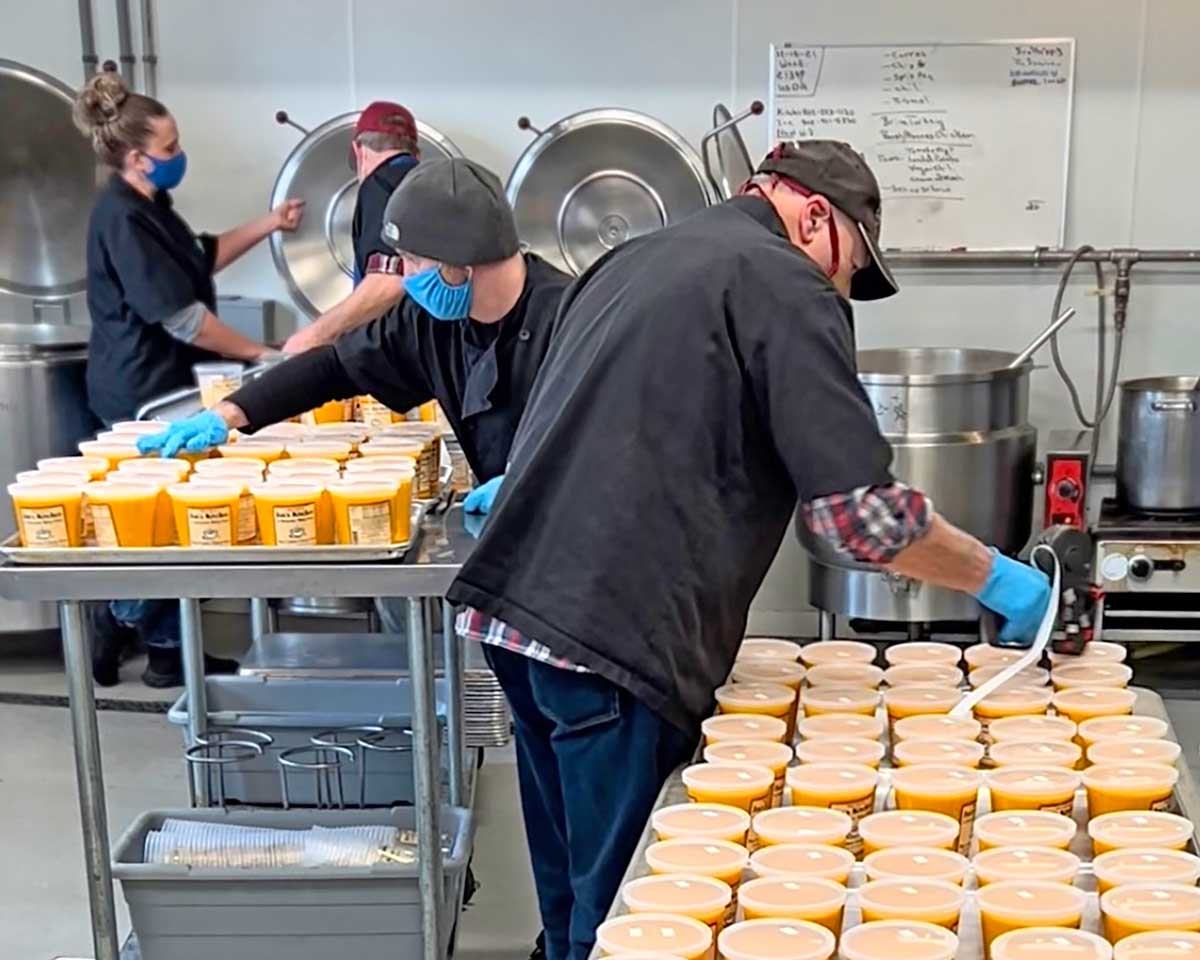
Joe’s crew hard at work at their production kitchen in Montpelier, VT

A Co-op Favorite

At the Co-op, we’re proud to offer a rotating selection of Joe’s Kitchen soups, showcasing the best of Vermont’s seasonal produce. From hearty stews to creamy bisques, there’s a flavor for everyone. Which one will you try next?

Rooted in the family traditions passed down from his grandmother’s kitchen, and combining locally sourced ingredients with time-honored cooking methods, Joe’s Kitchen soups bring together the quality and essence of home-cooked meals with the convenience that busy lives demand.

Co-op Member-Owners, don’t miss your chance to stock up and save 20% on Joe’s Kitchen soups from January 21st to 27th!

Spotlight on Jasper Hill Farm

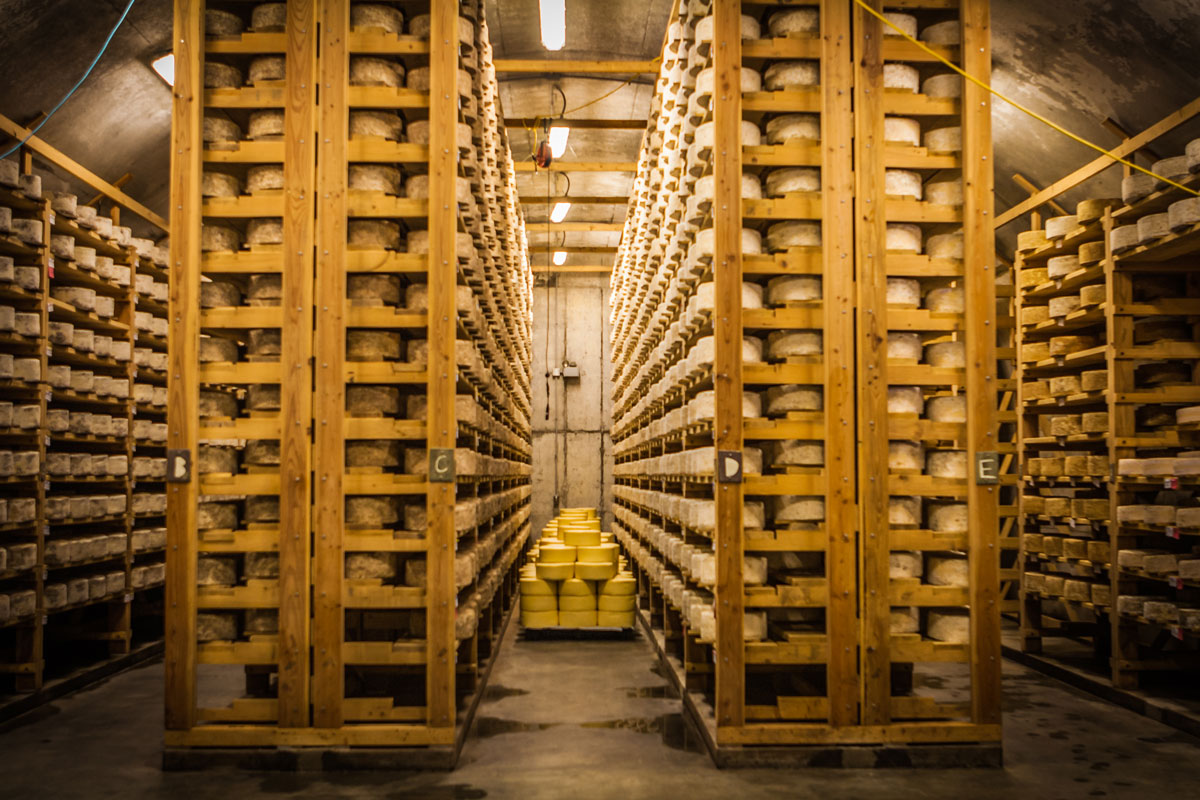
If you’re a lover of Vermont artisan cheese, then you’re likely no stranger to the producer basking in the glow of this week’s Member Deals Spotlight — Jasper Hill Farm. And we think you’ll be thrilled to hear that from December 24th – 30th, Co-op member-owners can enjoy a 20% discount on their full lineup of award-winning local cheeses – just in time to put together a crowd-pleasing holiday cheese board! Read on to learn more about the brothers behind this epic operation, their innovative approach to cheesemaking, and the legendary underground cellars where they age cheeses to ripe perfection:


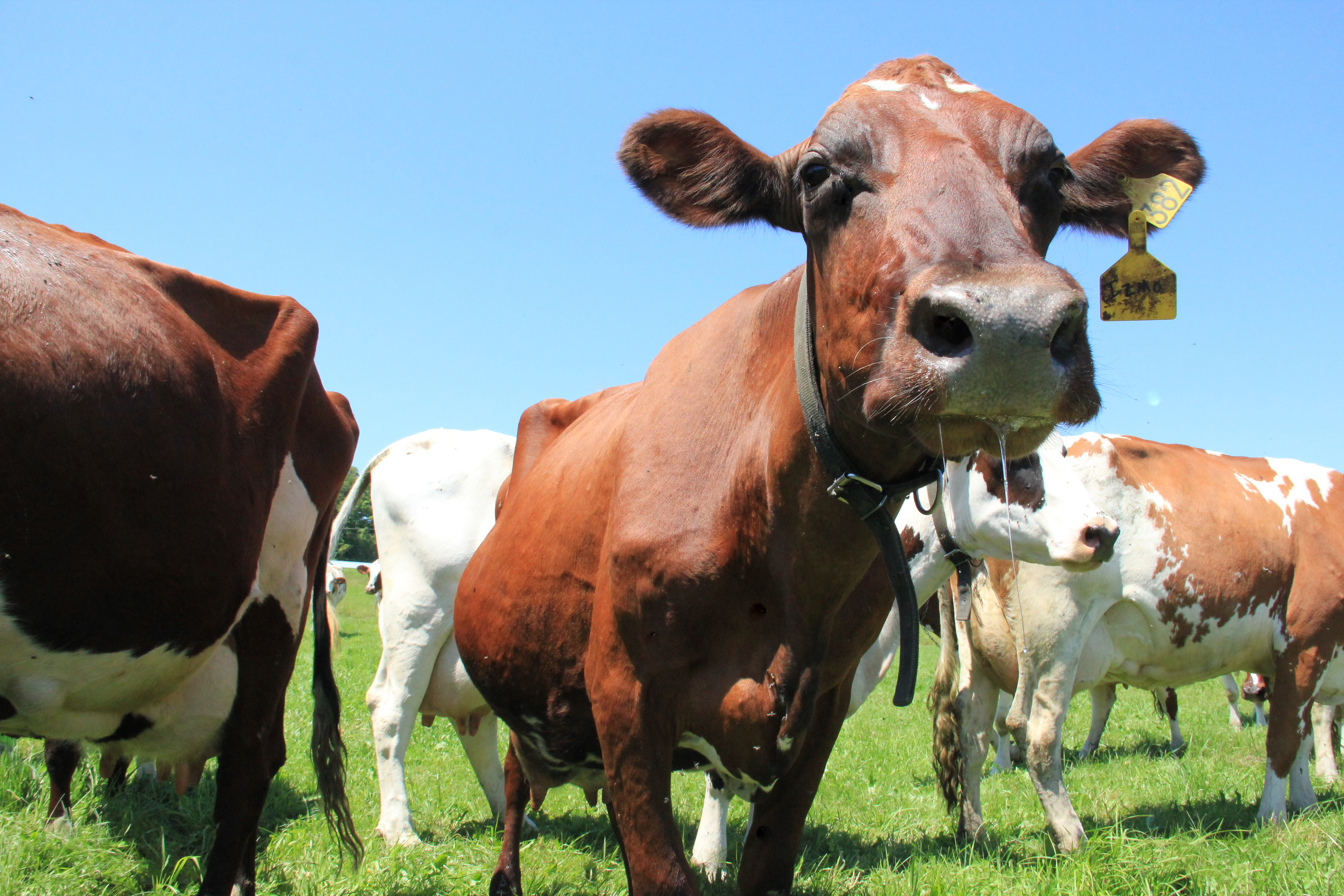
Deep in the heart of the dairy country of Vermont’s Northeast Kingdom is a dairy farm like no other. A glimpse of the main barn, painted deep-space blue with cows in astronaut attire and a moon made of cheese, provides the first hint that you’ve landed somewhere unique. Brothers Andy and Mateo, along with their wives, Victoria and Angie, knew they needed to do something different when they purchased this derelict dairy farm in 1998 — the same year that one-third of the neighboring dairy farms in the community sold their cows under intense financial pressures. Small-scale farms like this were becoming more difficult to keep up and running – a 50-cow farm like theirs would have to compete with average herd sizes of about 900 cows out west, as all of that milk is priced by the same commodity market. But the brothers were eager to find meaningful work in the place that they loved and wanted to demonstrate the ability to make a good living milking 45 grass-fed Ayrshire cows on a rocky hillside in Vermont. 

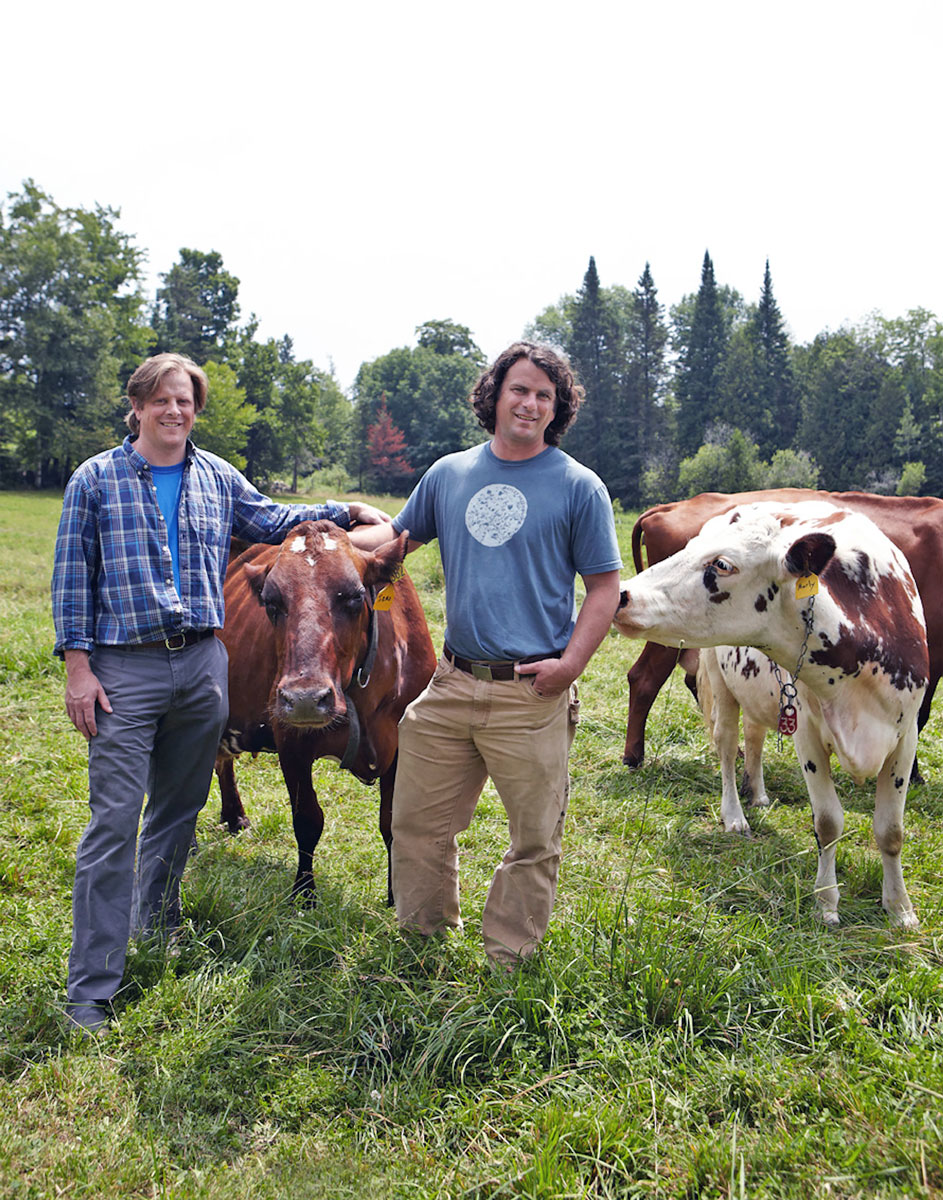
Brothers Andy & Mateo Kehler. Image by Colin Clark.

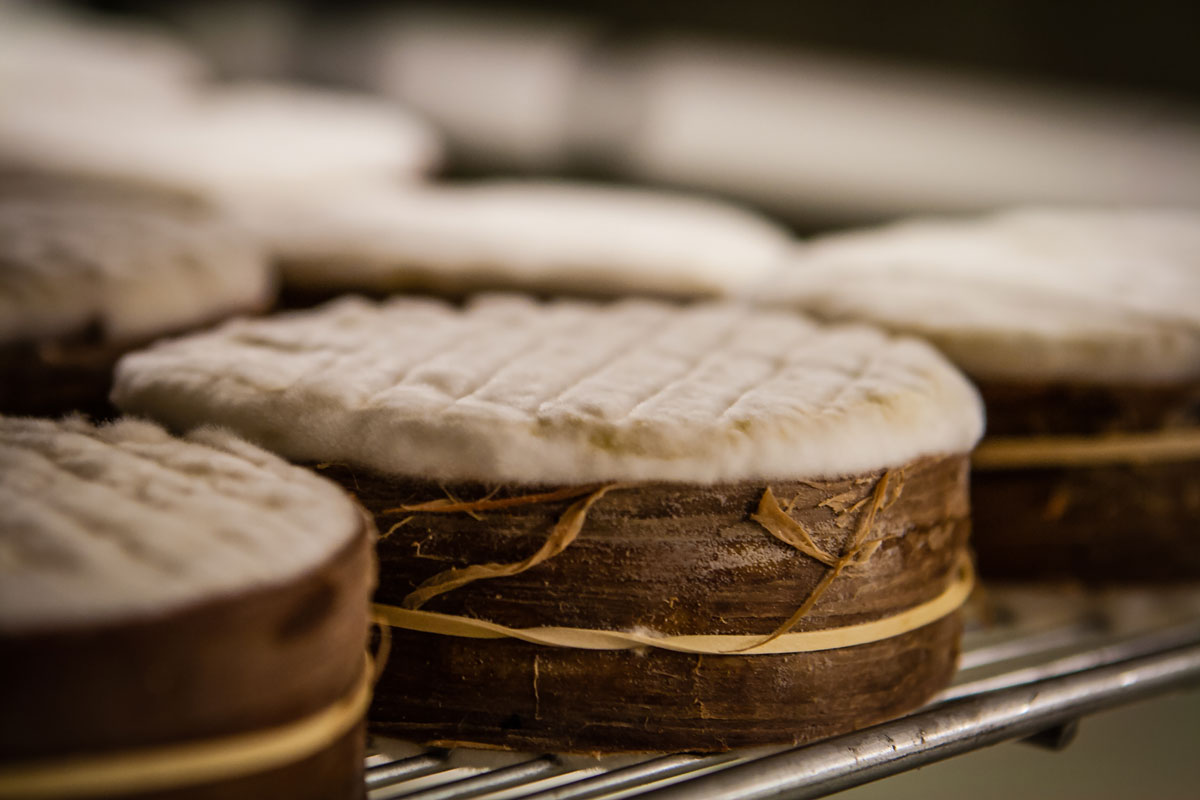
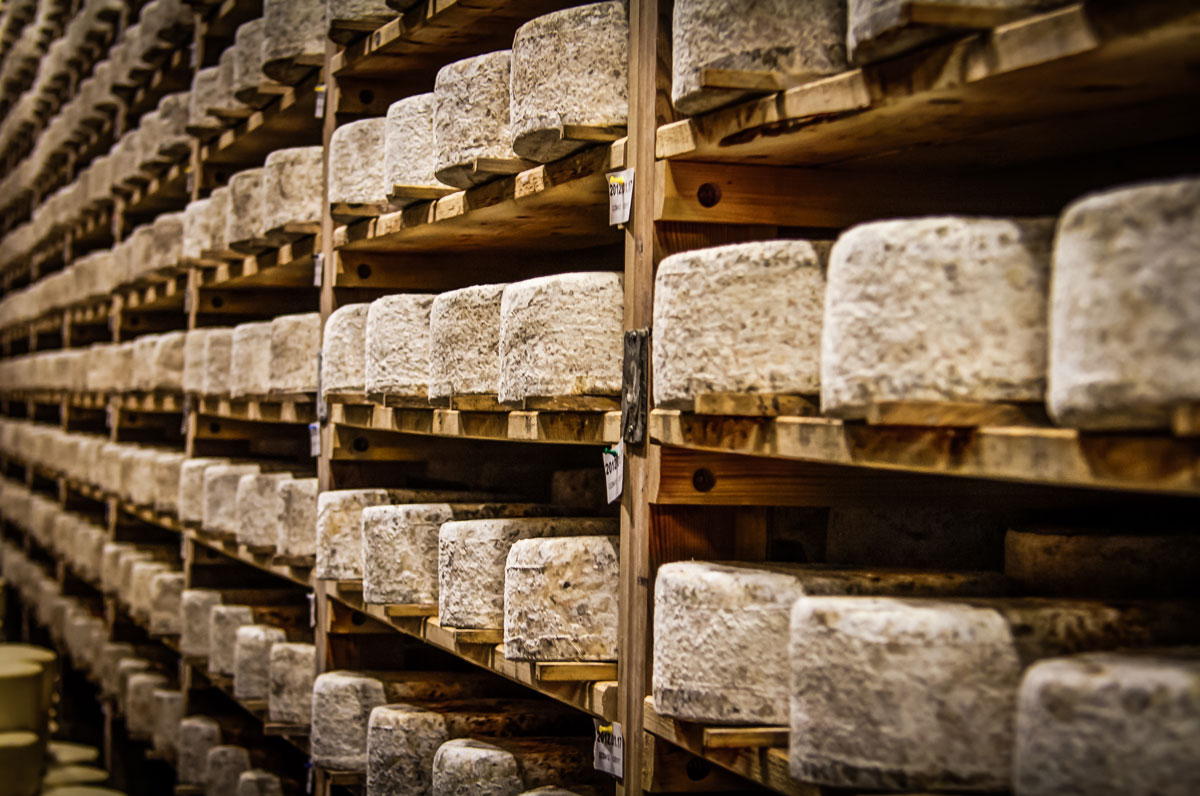
Over the next 5 years, they worked hard to patch up the barn, build up their herd, improve their pastures, construct a creamery, and carve out a cave that would provide the ideal conditions for aging European-style natural rind cheeses. By 2003, they were ready to sell their very first cheeses and quickly amassed a strong following in the burgeoning American artisan cheese market. An interesting call from neighboring Cabot Creamery would change the course of their plans and set them down a path that involved creating opportunities for other local cheesemakers to get their product to peak potential. Like most cheesemakers, Cabot lacked a space dedicated to cultivating natural rinds. In fact, their warehouses were focused on keeping surface mold away from cheese. The Kehlers were nearby, hungry to grow their business, and most importantly, had a temperature and humidity-controlled space designed to grow natural rinds. The result was Cabot Clothbound Cheddar and the awards and accolades soon followed, as one of the first batches took home Best of Show at the 2006 American Cheese Society Conference.  Andy & Mateo recognized the potential in these kinds of collaborations and drew up plans for an expanded aging facility beneath one of the pastures of Jasper Hill Farm.

The Cellars at Jasper Hill

Two years later, they formally opened the Cellars at Jasper Hill —  a 22,000-square-foot aging facility featuring seven vaults specifically calibrated for various cheese types. This allowed them to partner with a network of other local cheesemakers and reduce the barriers to entry for those interested in value-added production. According to their website, “ripening work for natural-rind cheeses takes up more than 70% of the labor for a batch of cheese, over its lifetime. By pooling these efforts, farmstead producers could spend more time focusing on the true drivers of cheese quality: milk production and cheesemaking. Instead of sending hundreds of small boxes through the post, refrigerated trucks now pick up pallets of cheese destined for regional and national distributors. The Cellars is now the final stop for cheeses coming from six different creameries. Its mission is to be the standard-bearer for quality and innovation in the artisan cheese industry.”

The award-winning Harbison. Image by Bob Montgomery

Andy & Mateo have a knack for distilling the local landscape into their cheeses. They took this approach to new heights in 2013 when they opened a state-of-the-art laboratory on their farm, complete with a staff of food microbiology experts. The idea for this new endeavor was sparked by their partnership with Harvard scientist Dr. Rachel Dutton in 2010, who was using cheese as a model to research how small microbial communities interact. One of the profound discoveries of Dr. Dutton’s work was the notion that the environment (cows, cheese caves, pastures) and methods (washing, salting, managing acidity) were as important to the development of cheese rinds, if not more so, than the ingredients. Microbes, including yeast and bacteria, are critical partners in the cheesemaking process, turning milk into solids, and those solids into cheeses with distinctive aromas, flavors, and textures. American cheesemakers have very limited options when sourcing the cultures for their cheeses, as there are only three domestic suppliers of these critical microbes, all of which are multinational chemical corporations, including DuPont and Cargill. This significantly limits the number of available cultures and stifles the individualism that artisanal cheesemakers crave.

The happy grass-fed cows of Jasper Hill Farm. Image by Blake Noyes.

With strong science to support Dr. Dutton’s findings, a new lab, and a team of microbiologists lending their expertise, Jasper Hill Farm has been able to experiment with creating their own microbial cultures, which are sourced directly from the milk produced by the cows on their farm. They have also found that their raw milk cheeses, like Winnimere, contain all of the microbes needed to produce a fantastic cheese, thus avoiding the need to add microbial cultures. While this all may sound very high-tech for something as rudimentary farmstead cheese, Andy and Mateo are quick to point out that a cheese will never be better than the milk that it’s made from, you can’t make good milk without healthy animals, and you can’t have healthy animals without a healthy landscape filled with nutrient-dense forage. The microbial ecology of raw milk is the sum of these practices on a farm.

The proof of success lies in the supreme quality of the cheeses coming out of the Cellars at Jasper Hill. Their cheeses have garnered a long list of awards including ‘Best American Cheese’ at the World Cheese Awards and ‘Best in Show’ at the American Cheese Society for Harbison; an American Cheese Society ‘Best in Class’ for Bayley Hazen Blue, and two Top 20 nods at the 2020 World Championship Cheese Contest for Highlander and Lait Bloomer. Bayley Hazen Blue was even featured in a White House dinner when the Obamas held a State Dinner in honor of the French President. If you’re worried it might all be going to their heads, a quick trip to their YouTube channel will reassure you that they’re not taking themselves too seriously. The documentation of a recent escape attempt by a wheel of Cabot Clothbound will also be sure to leave a smile on your face, the music video parodies are a must-see, and you won’t want to miss this clip of their Bayley Hazen Blue being shot into Earth’s outer atmosphere with the help of a weather balloon, an HD camera, and GPS tracking software.  The cheese was successfully lofted 100,000 feet up and then retrieved where it parachuted down a couple of towns to the west of the Greensboro, VT launch site. Talk about stellar cheese!!

The Bayley Hazen Blue Moon launch. Image by Ryan Nolan.


Jasper Hill Farm from The Editorium on Vimeo.

Spotlight on Champlain Valley Creamery

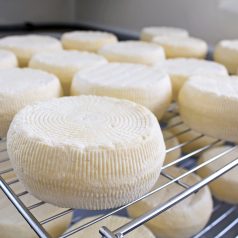
We’re casting our Member Deals Spotlight on a local organic creamery that produces delicious award-winning cheeses just a few short miles from the Co-op. Champlain Valley Creamery uses traditional techniques and small-batch pasteurization to produce their cheese entirely by hand in a net-zero solar-powered facility in Middlebury. Member owners can enjoy a 20% discount on Champlain Valley Creamery’s fantastic lineup of cheeses from December 10 – 16 – just in time for those holiday parties! 


Champlain Valley Creamery was first established in 2003 by founder and owner Carleton Yoder. With a graduate degree in food science and a background in wine and hard cider making, Yoder was eager to run his own food business. With Vermont’s abundance of amazing local milk, small-scale cheesemaking just made sense. Yoder began his adventures in cheesemaking in a facility in Vergennes, where he focused on two products: Organic Champlain Triple and Old Fashioned Organic Cream Cheese. Both have been awarded well-deserved honors from the prestigious American Cheese Society.

Carleton Yoder

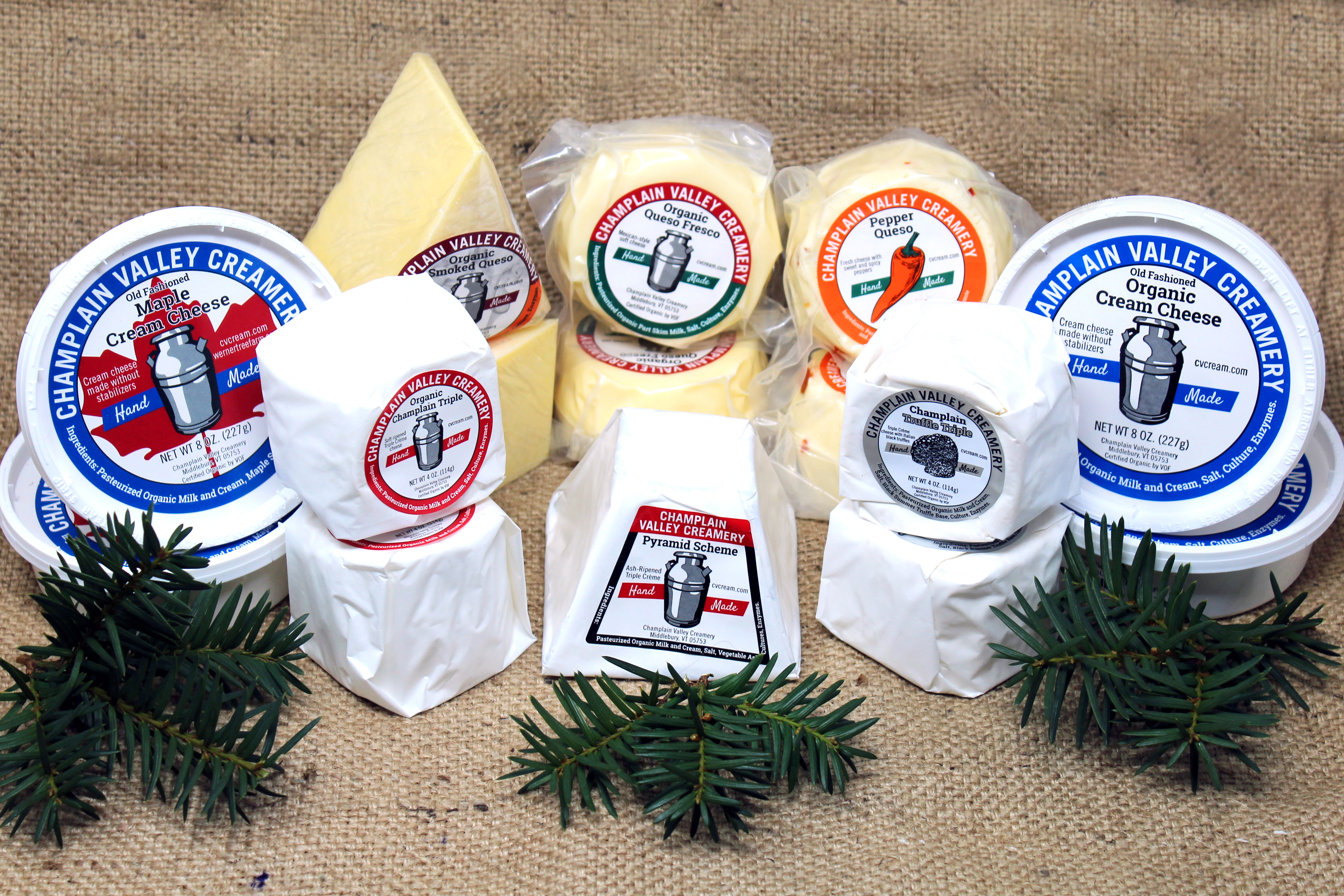
Over the years, the creamery has continued to grow and expand its offerings, eventually moving into a net-zero solar-powered facility on Middlebury’s Exchange Street in 2012. Yoder and his small crew now produce an expanded lineup of cheeses including Queso Fresco (available in original, house-smoked, and pepper varieties),  Maple Cream Cheese, a pyramid-shaped triple cream with a layer of ash known as Pyramid Scheme, and, most recently, they began importing Italian truffles to produce the Champlain Truffle Triple.


The Creamery also made a switch last year to using 100% grass-fed organic milk from the Severy Farm in Cornwall. The milk only travels a few short miles from the farm to the creamery, where the cheesemaking begins within hours of arrival. The use of grass-fed milk results in a richer, creamier cheese that displays subtle seasonal changes reflective of the changing diet of the cows as the seasons progress. It’s truly the terroir of Addison County in each decadent bite of cheese.

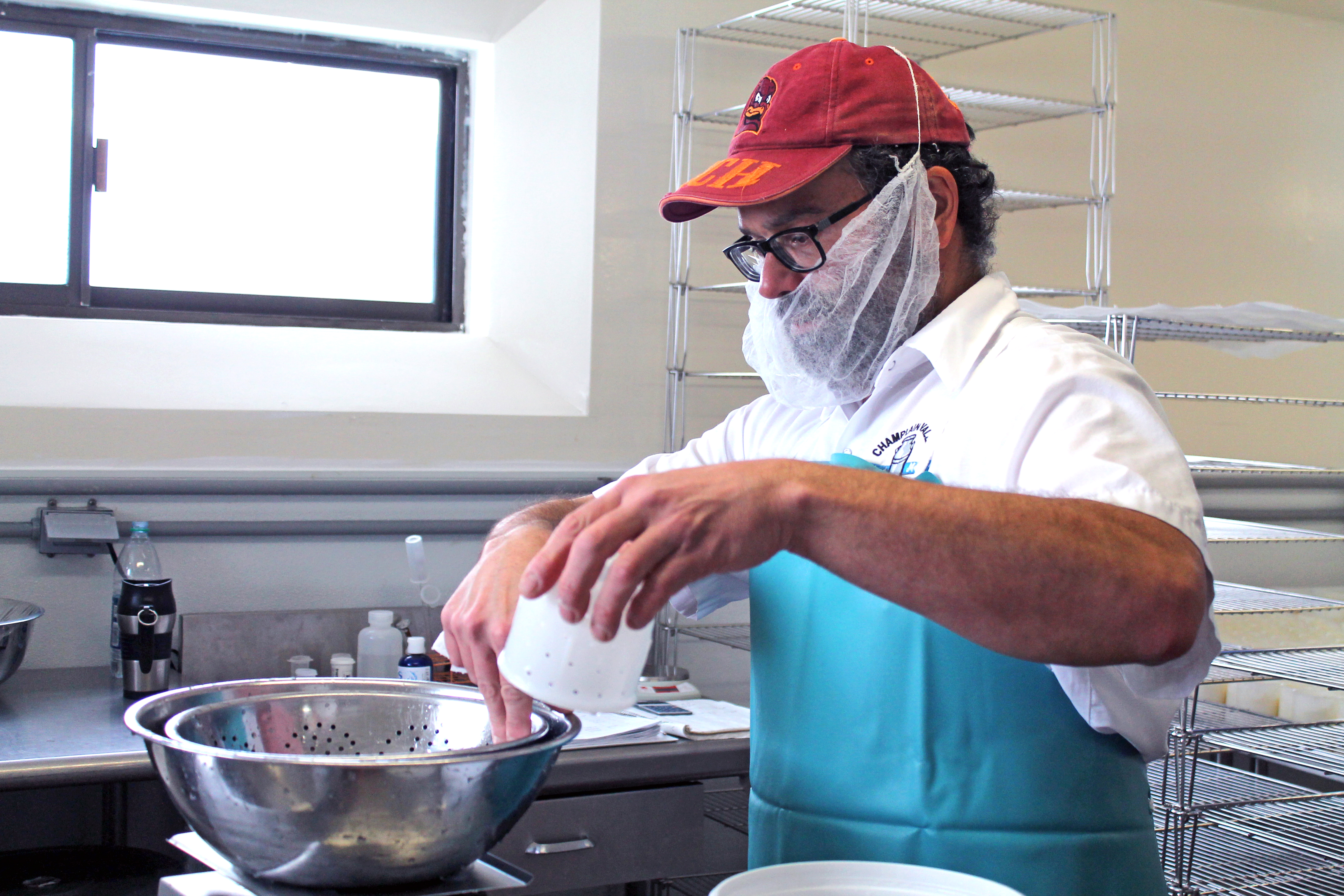
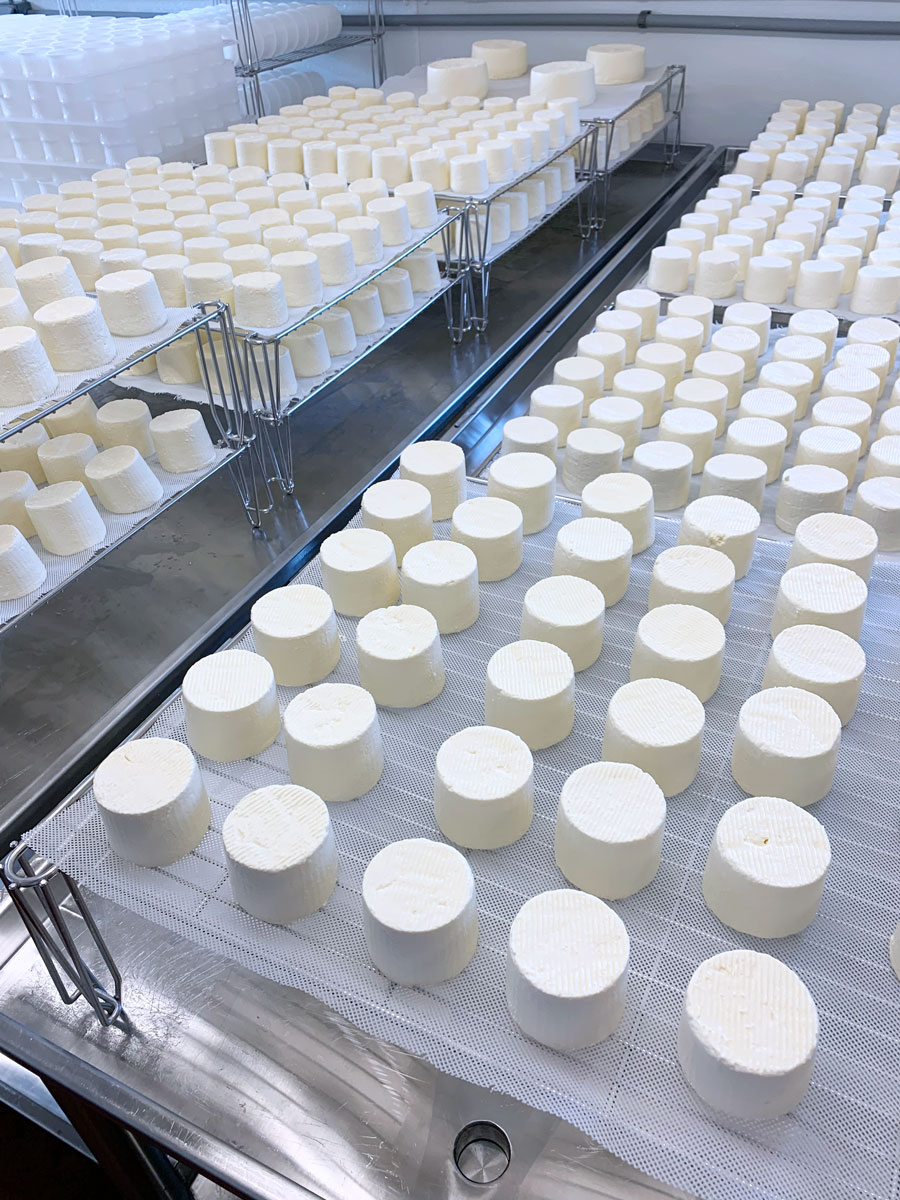
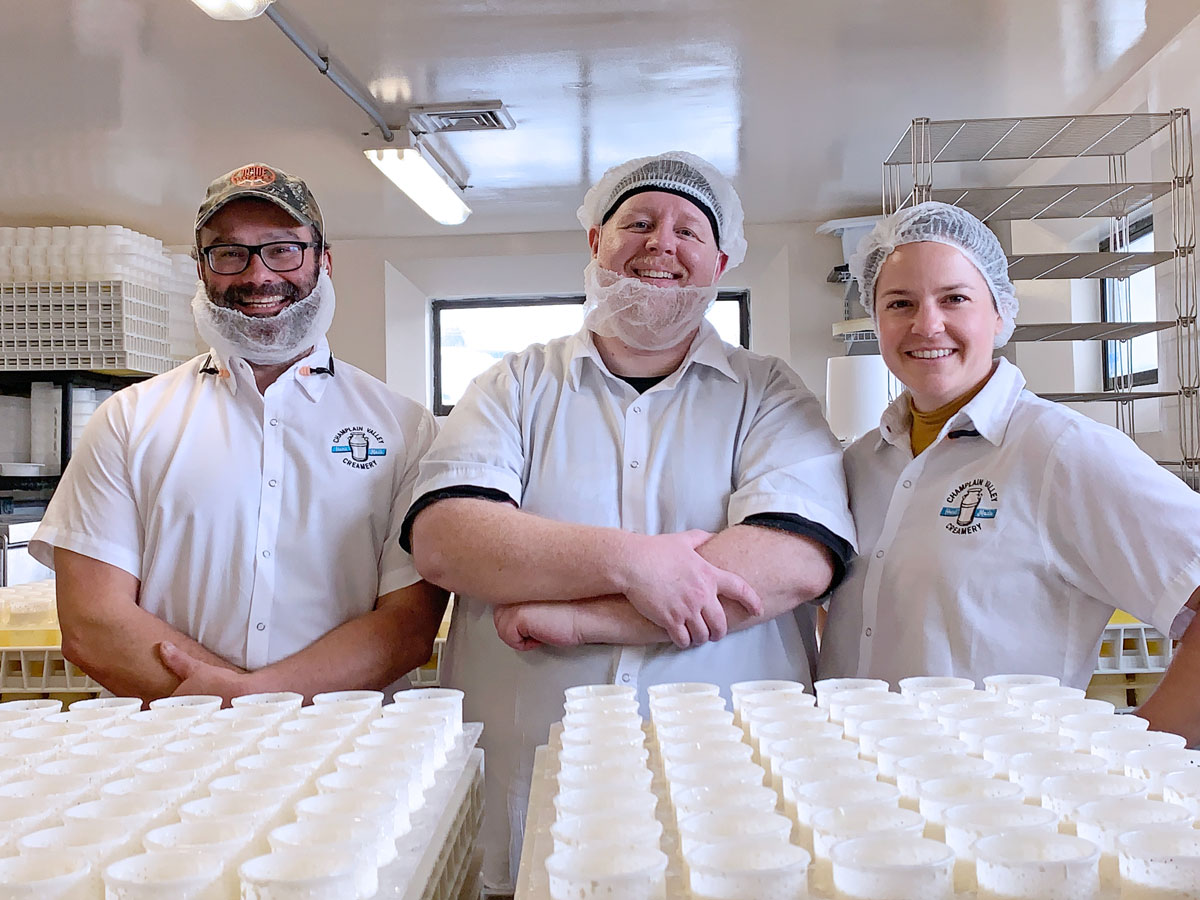
Yoder is supported by a small crew that is just as dedicated to the craft as he is. They use traditional techniques and small-batch pasteurization to produce their cheeses entirely by hand.  A recent visit to their facility found the crew in constant motion, measuring, stirring, monitoring temperatures, and generally putting every bit of the day’s fresh batch of milk to good use. The bulk of the cream and whole milk is used to produce the Organic Champlain Triple, Champlain Truffle Triple, and the two varieties of cream cheese. The part-skim milk is then transformed into each of the three varieties of Queso Fresco, and the whey is drained off to create hand-dipped, basket-strained ricotta that is only available to a few select restaurants in the area. The only remaining by-product is a small amount of whey, which is sent to feed the happy pigs at Hinesburg’s Full Moon Farm, resulting in an operation that is hyper-local with very minimal waste. 

According to Yoder, “cheesemaking is hard work but we strive to let the milk, cream, culture, salt, and mold shine through with their amazing flavors.” It’s this minimalist approach and the desire to honor the high-quality local ingredients that make Champlain Valley Creamery’s cheeses stand out – on our shelves and at retailers across the country.
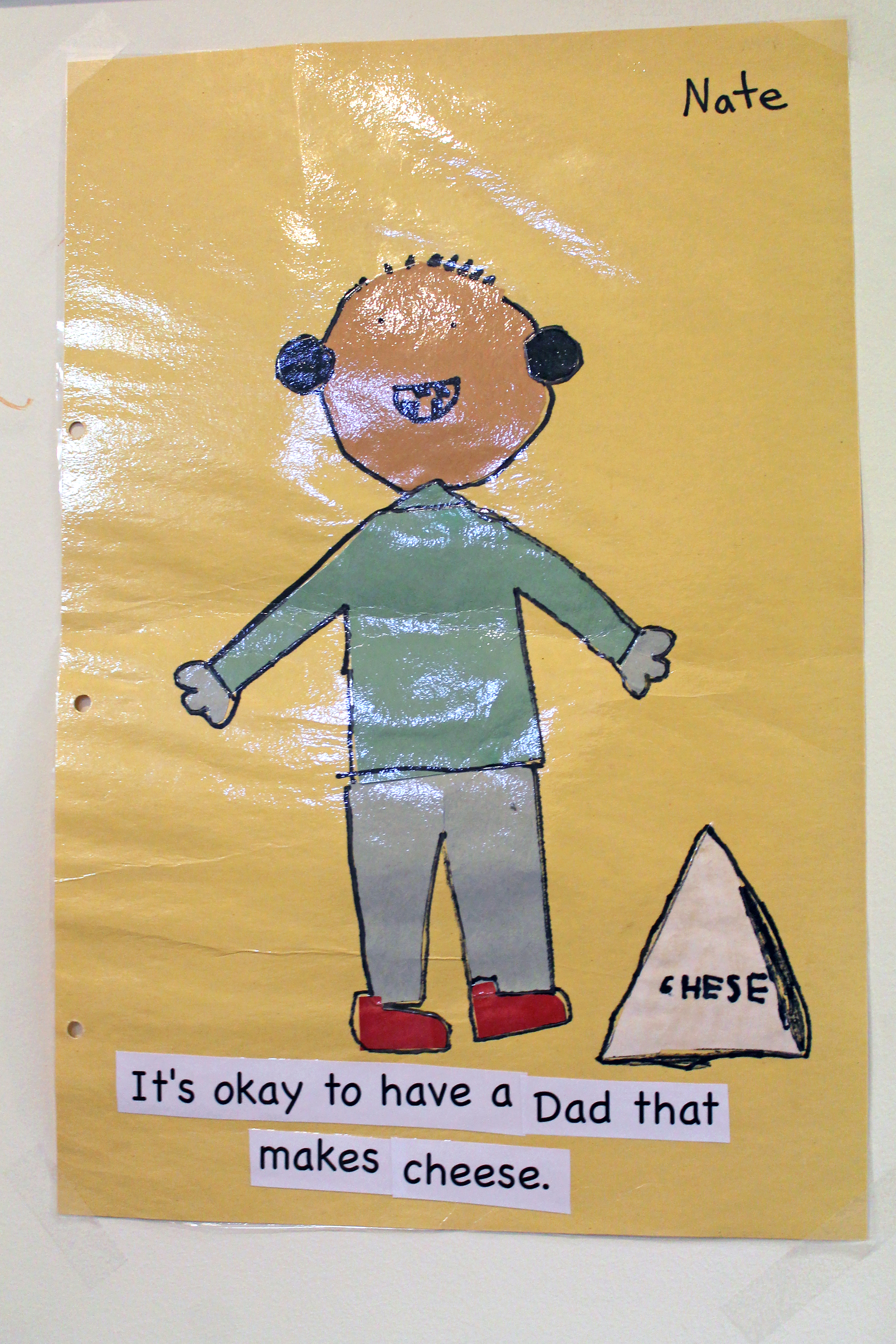
Picture hanging above Yoder’s desk made by his son, Nate


Co-op Connection Business of the Month – Maple Landmark

If you’re searching for thoughtfully crafted, eco-friendly toys for the kids on your holiday list, look no further than Maple Landmark, our featured Co-op Connection Business. Based right here in Middlebury, Vermont, Maple Landmark has been making sustainable wooden toys, games, and gifts for over 40 years. Visit their factory store on Exchange Street and show them your Co-op membership card to enjoy 10% off your purchase all year long! 

A Vermont Legacy of Craftsmanship

Maple Landmark began humbly in 1979 in founder Mike Rainville’s parents’ basement. Today, the company operates out of a 28,000-square-foot facility, producing nearly all of the items they sell. With a team of over 40 dedicated employees, they supply toys and gifts to stores and catalogs nationwide, while maintaining a delightful factory store for local shoppers. They take great pride in  being a local business that supports other local businesses, while operating with sustainability at their core.


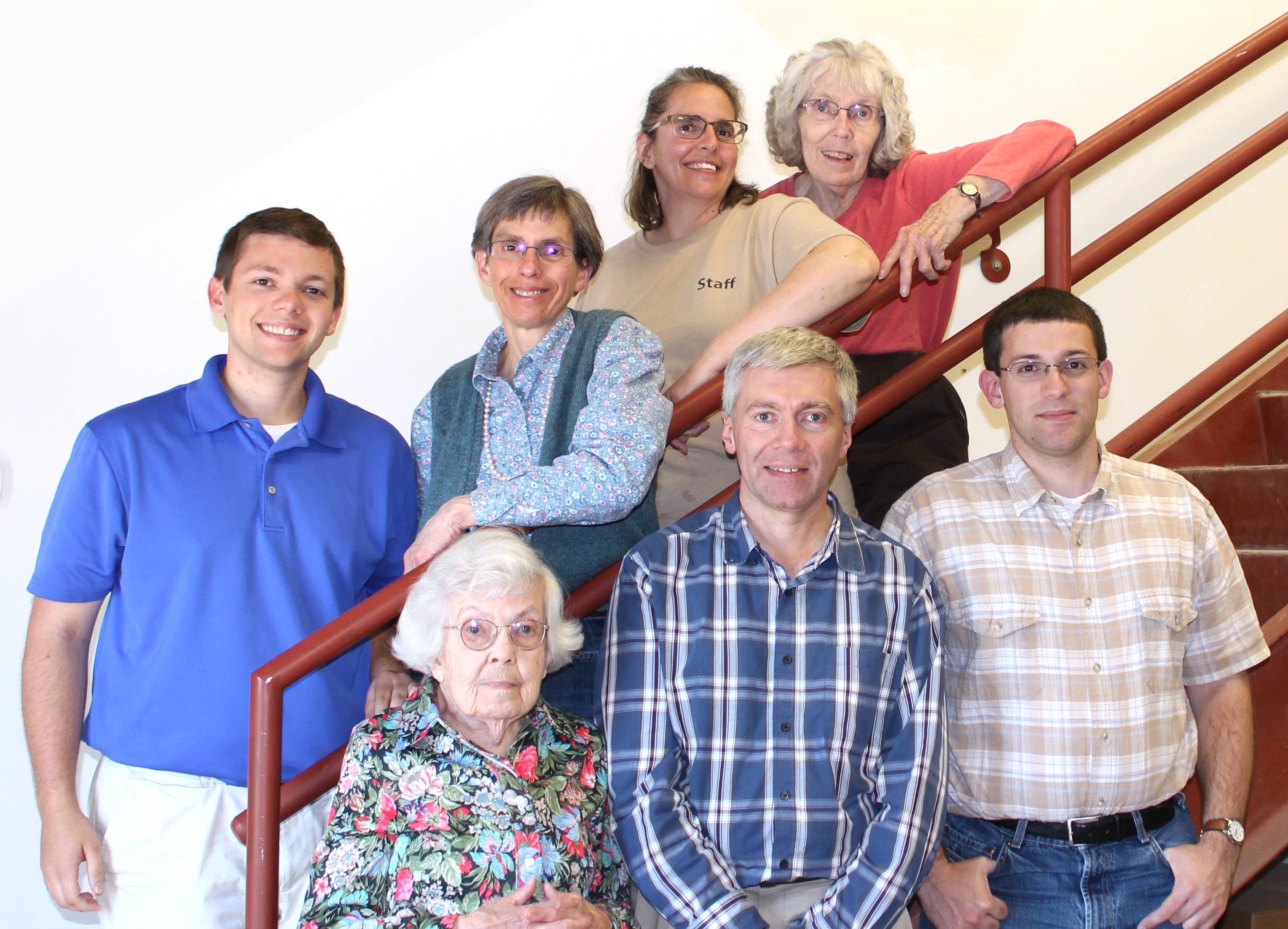
Three generations of the Rainville family

A Family Business 

Maple Landmark is run by three generations of the Rainville family. Founder Michael Rainville serves as president and CEO, overseeing daily operations. His wife, Jill, manages the office, and his sister, Barbara, leads marketing and helps in the finish room. Their sons, Adam and Andrew, have joined the team as project and communications managers, respectively, contributing to product innovation and outreach efforts. Even Michael’s parents pitch in, with his mother, Pat, supervising finishing and hand-painting, and his father, Claude, helping with packing and lawn care in his spare time. Together, they embody a multigenerational dedication to quality and community.

Sustainably Sourced Materials

The wood Maple Landmark uses is primarily native to Vermont, including rock maple, pine, and cherry—ideal for wooden toys and gifts. By focusing on making smaller items, they are able to utilize downgraded lumber by cutting around defects, and make use of smaller “cast-off” cuts. They are also careful to work exclusively with local suppliers who are thoughtful about how the wood is harvested. 
Click here to learn more about the use of lumber for Maple Landmark products.

A Commitment to Zero Waste

An honest concern for preserving our limited natural resources mixed with good old-fashioned Yankee frugality ensure that sustainability is more than a buzzword at Maple Landmark. Instead of sending their residual waste to the landfill, scrap wood becomes free kindling for local families, and wood shavings are donated to area farmers, who use it for cattle bedding. Over-packaging of products is another major source of waste, so Maple Landmark nixes plastic, and ships their products in reused and upcycled packing. Click here to learn more about their extensive and thoughtful recycling and conservation practices. 

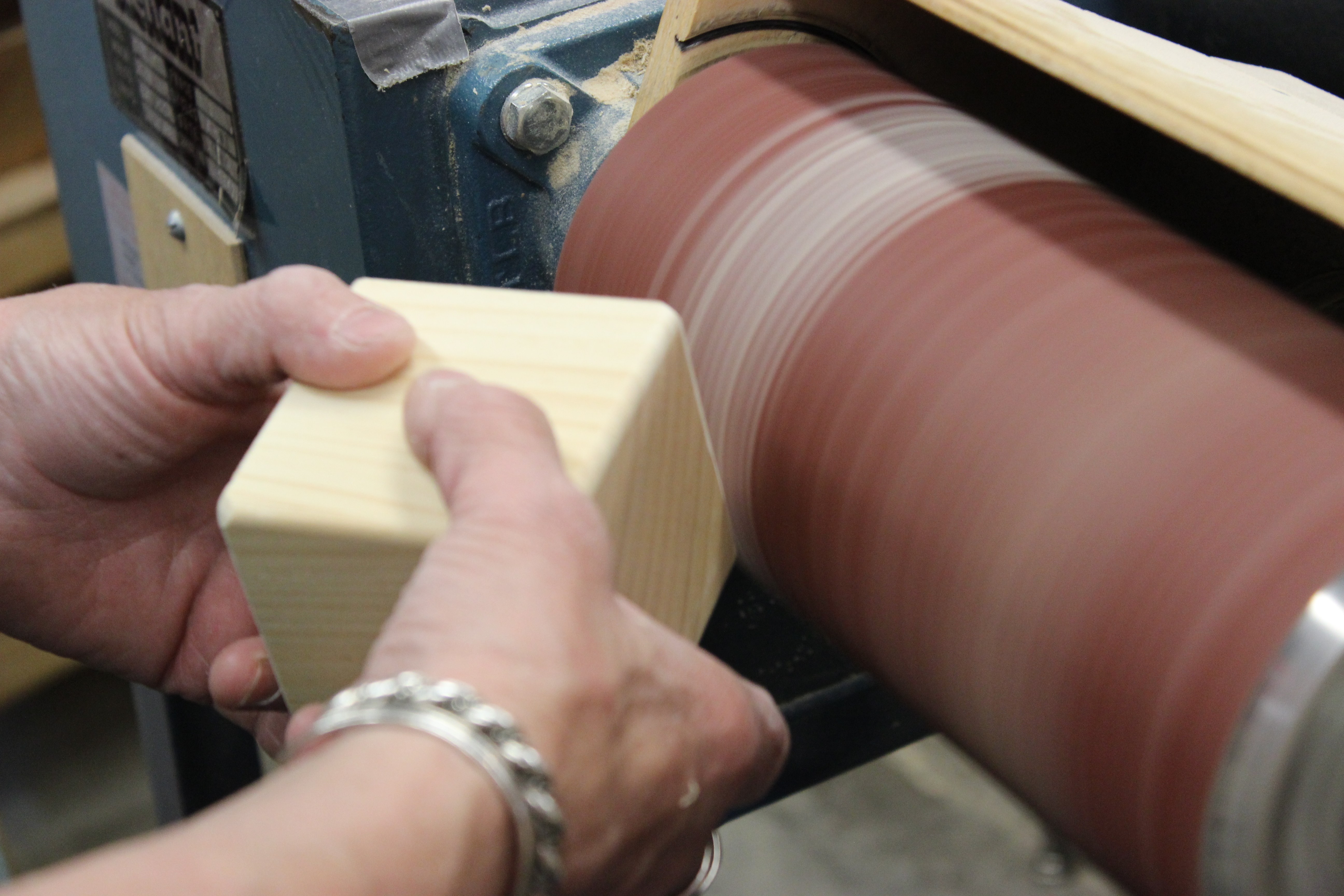
How It’s Made

Support Local, Shop Thoughtfully

Maple Landmark is more than just a toy company—they’re a pillar of our community, creating beautiful products while protecting the environment. This holiday season, we invite you to visit their factory store located at 1297 Exchange Street in Middlebury, and discover the magic of Vermont-made craftsmanship.

Santa is coming to town!

Santa and his elves will visit Maple Landmark on Saturday, December 14th. Tickets are limited – click here to reserve your spot! 

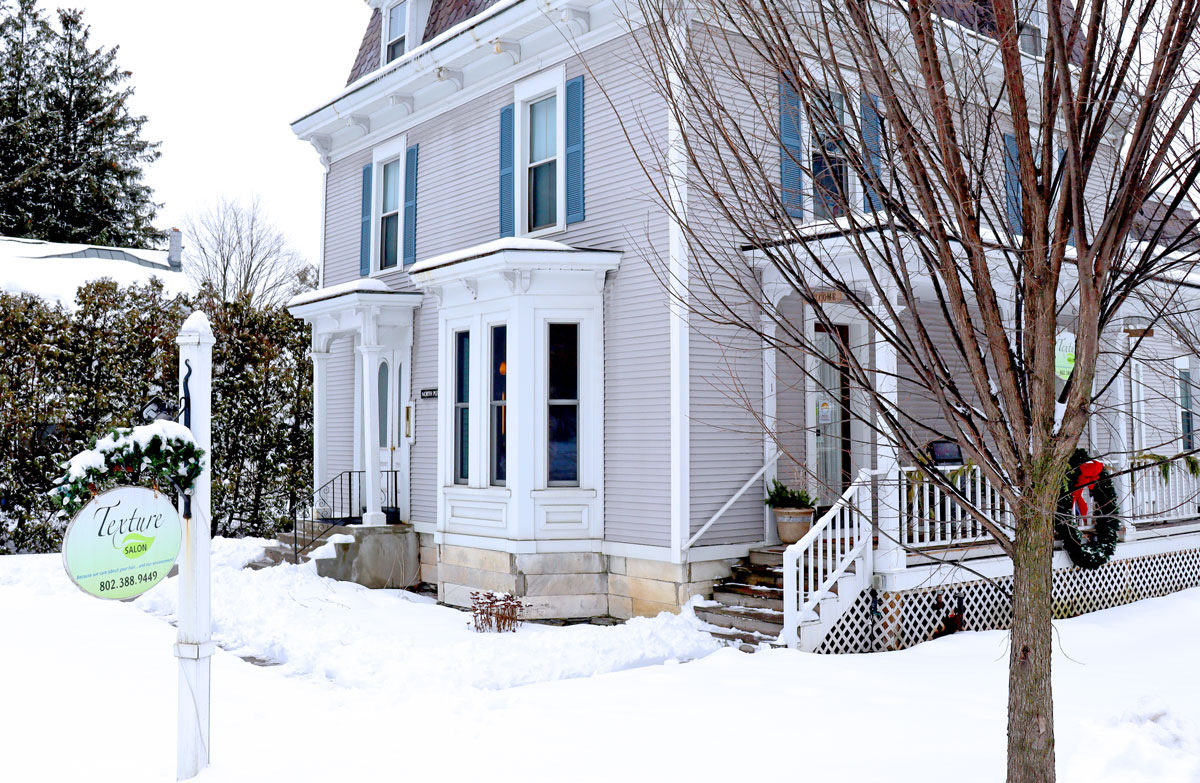
Co-op Connection Business of the Month: Texture Salon

New Image

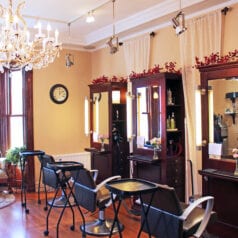
As Co-op shoppers, most of us pay attention to what goes into our bodies — and a lot of us are just as thoughtful about what goes on them. It’s no surprise that personal care ingredients matter, too. Our skin absorbs what we put on it, so choosing products made with safer, cleaner ingredients can make a big difference in our daily routines.

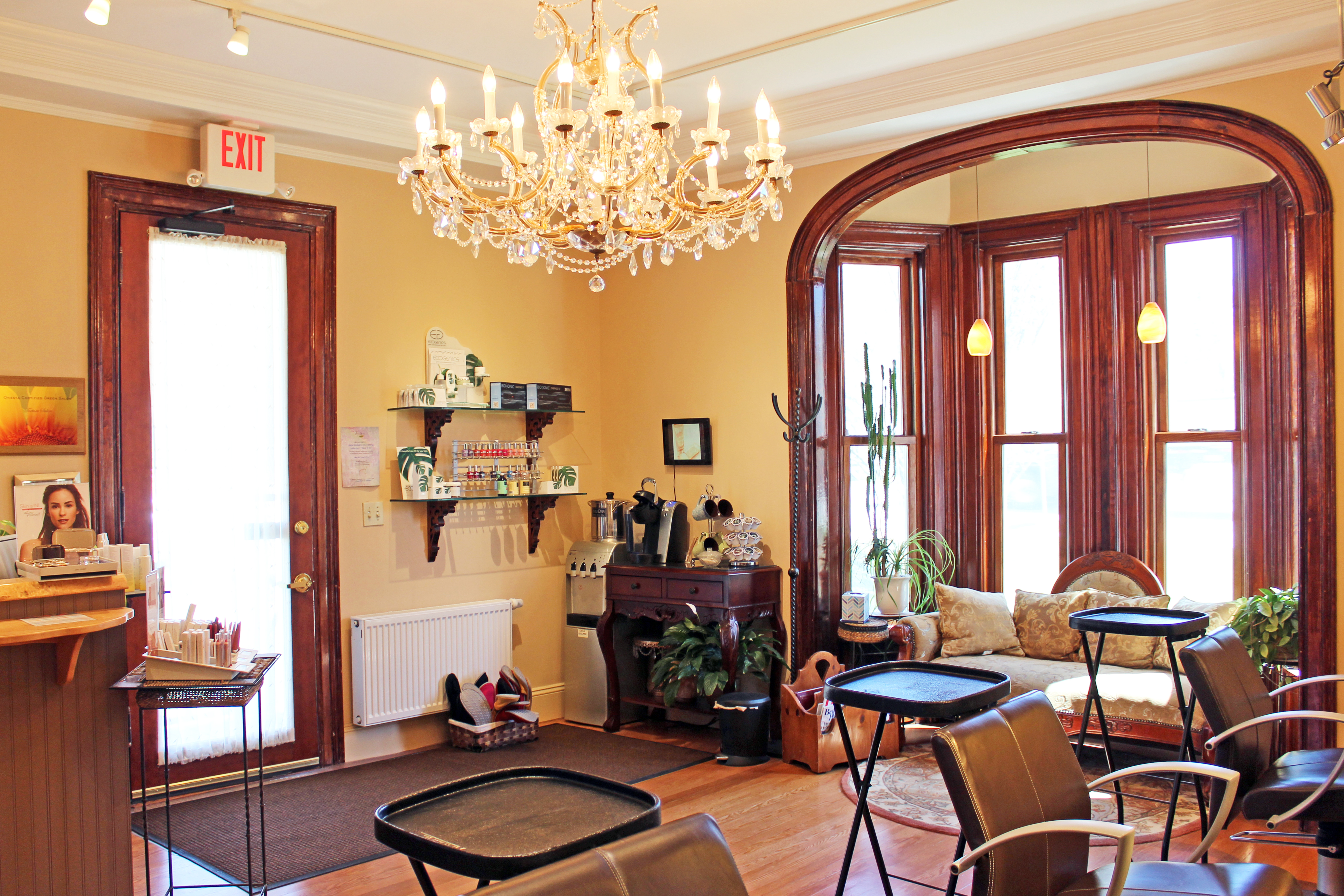
That’s why we’re excited to highlight Middlebury’s own Texture Salon. as this month’s Co-op Connection business. They offer safe, ingredient-conscious hair and skincare services — and member-owners get 10% off their first visit on products or services.

So, what sets Texture apart?
Salon owner David Warner Jr. puts it best:

“Since 2001 we have been committed to offering a new kind of salon experience where skin and hair care services are free of toxic ingredients (such as parabens, sodium laurel sulfates, talc, ammonia, formaldehyde, and other toxic agents), ethically-produced/tested, sustainable and environmentally friendly.”

Texture uses ammonia-free color, mineral cosmetics, and plant-based products, alongside thoughtful touches like air purification, salt lamps, and limited cell-phone use to support a calm space. As David explains:

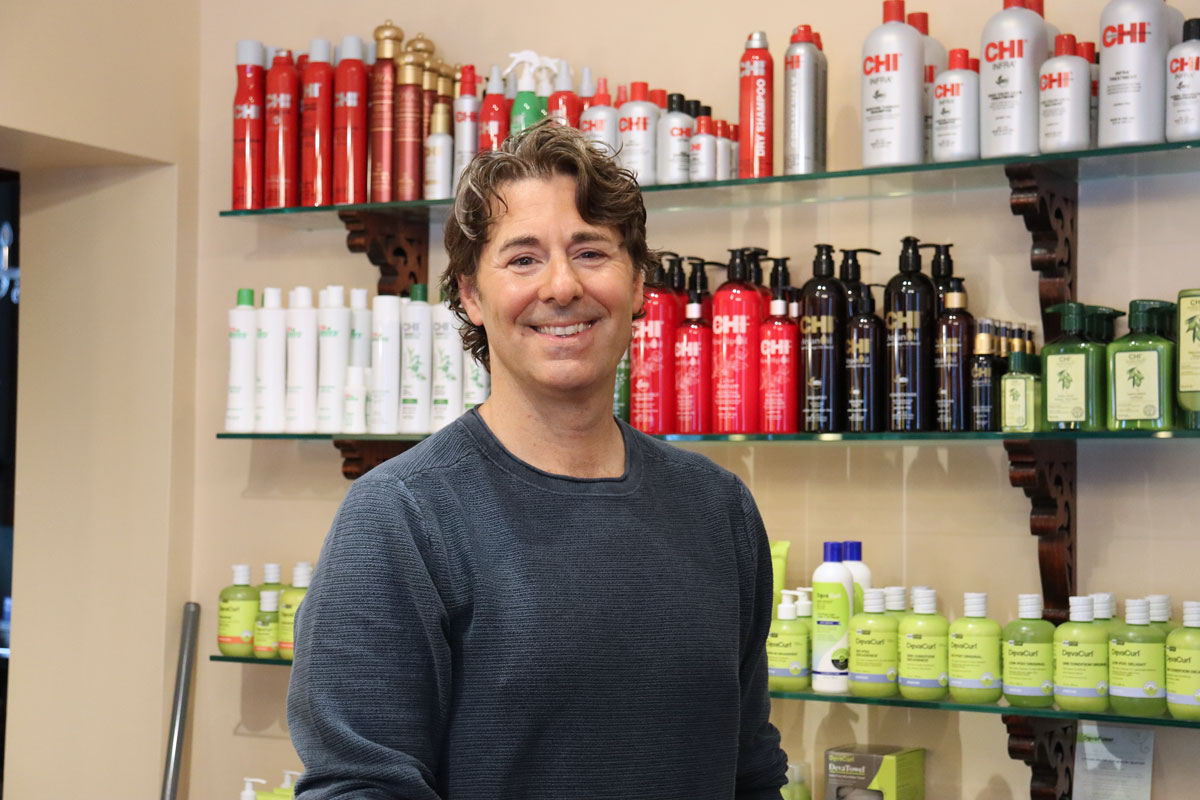
“Offering ammonia-free hair color (Chi and Organic colour systems), Karma Organic nail color, Deva Curl, Onesta, Soma, and a full line of Jane Iredale Mineral Cosmetics, at Texture Salon, we aim to provide a truly healthier, superior salon experience… We support recycling and alternative energy — we have 35 solar panels providing us with power!– and strongly oppose the use of animal-based products and testing.”

Texture also hosts community events and supports local charities, including The United Way.

Looking for hair color, styling, or skincare with a cleaner ingredient approach? Texture shows that caring for clients and caring for the environment can go hand in hand.
See their full list of services HERE!.


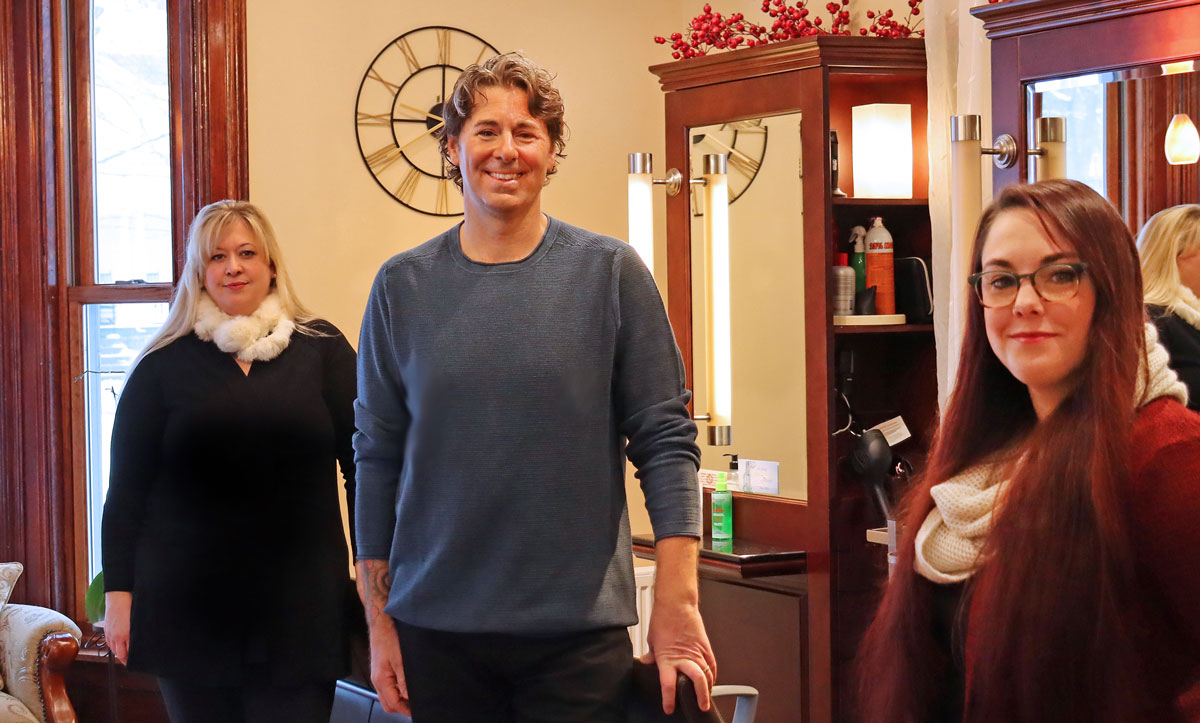
About the Texture Team

David Warner, Jr.
David graduated from O’Briens School of Cosmetology in 1994. Early in his career, he developed allergies to conventional salon products, which ultimately inspired him to open Texture Salon in 2001. He focuses on organic, ammonia-free options and continually researches safer alternatives. David has trained with Farouk Systems, attended the Deva Curl Academy in NYC, and specializes in corrective color and curly hair. Outside the salon, he loves history documentaries, time in nature, home projects, and traveling with his husband and their retired greyhound, Bruno. As David says, “It’s important never to forget why I entered the beauty industry. To have a real connection with my client and make them feel good about themselves.”

JoAnna Carter
JoAnna is a native Vermonter and licensed stylist since 2009. She prides herself on custom cuts for all ages and works confidently with Texture’s full line of Chi and Organic Colors.