Mary Hogan Fifth Graders Investigate Buying Decisions at the Co-op
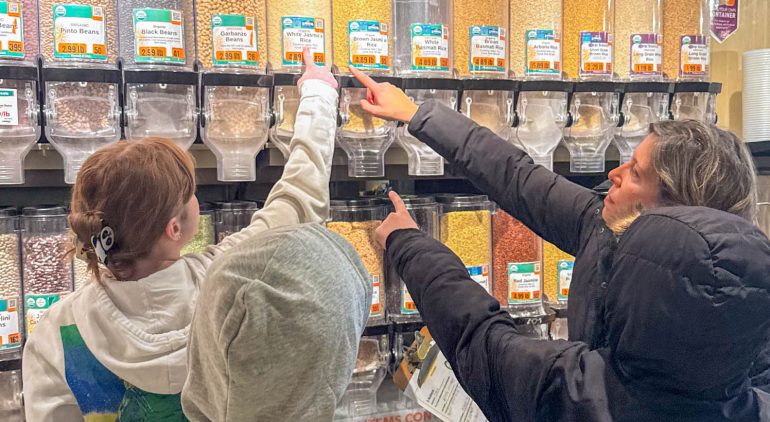
Last week, we had the pleasure of welcoming Jessica McColly’s 5th grade class from Mary Hogan Elementary School to the Co-op. The students are currently learning about how consumers and businesses make buying decisions – including discussions about fair trade, supply chains, and the ways everyday purchases can affect workers and farmers. We were glad to open our doors for a hands-on activity that brought those ideas into the real world.
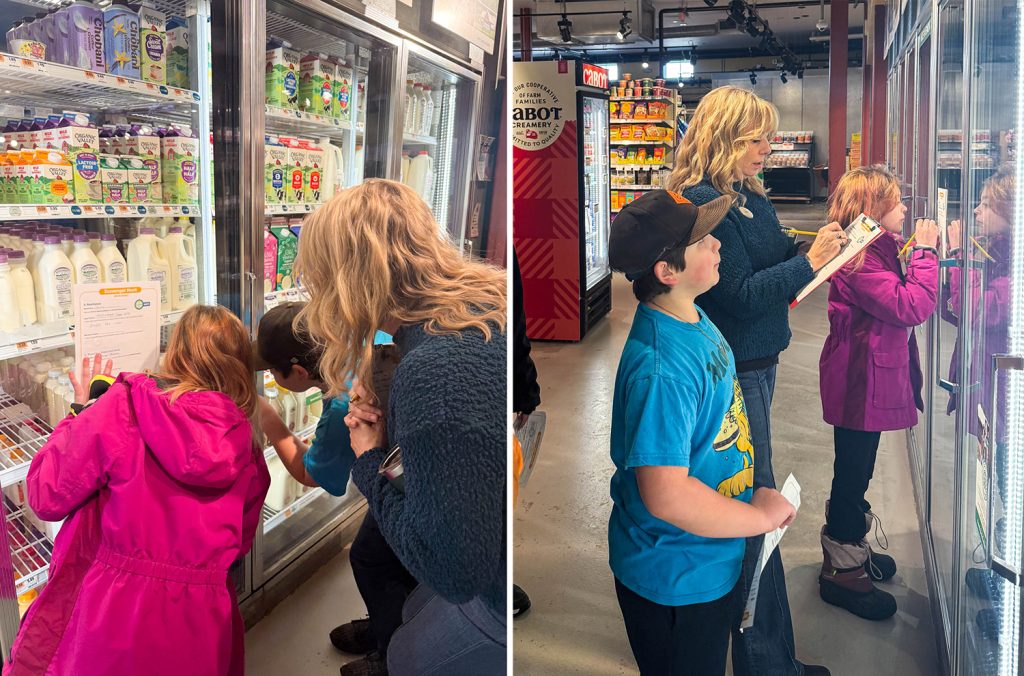
After a brief discussion about what influences buying choices – price, need, familiarity, supply – students paired off, grabbed clipboards, and headed into the store. Their assignment wasn’t to decide what people should buy. Instead, they were asked to investigate why a grocery store might choose to carry certain products in the first place.
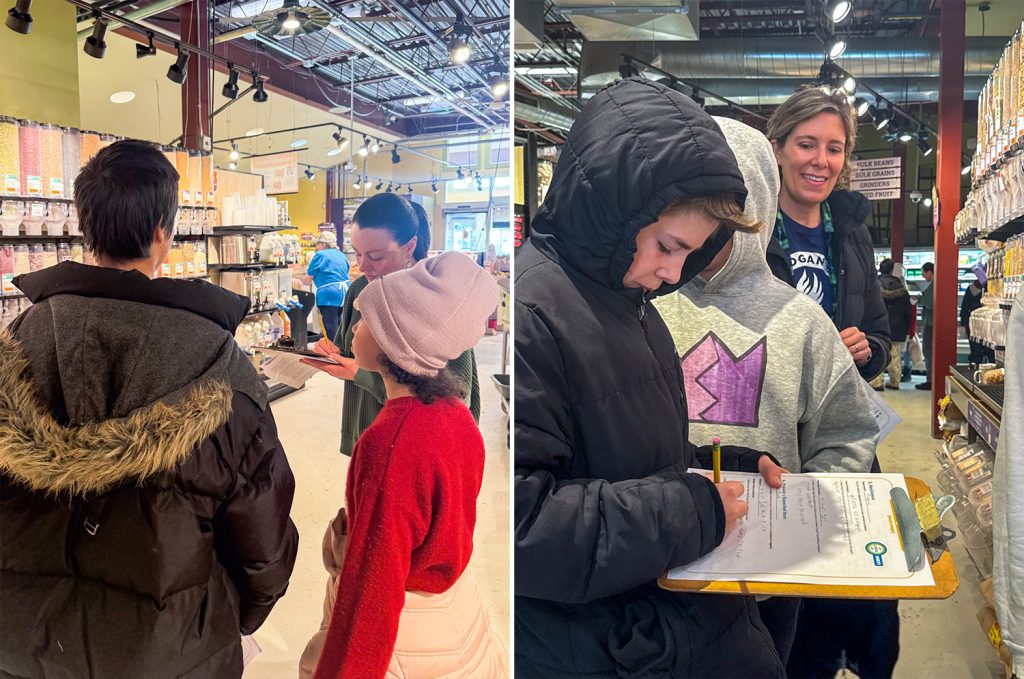
Each pair rotated through departments – produce, dairy, bulk, and grocery – answering the same set of questions in each space. They compared local and non-local foods. They examined different versions of the same item – organic and non-organic, store brand and national brand.
They considered what might make a product easier or harder to keep on the shelf if something changes. They also looked at familiar, widely expected foods that shoppers rely on, even if those items aren’t local.
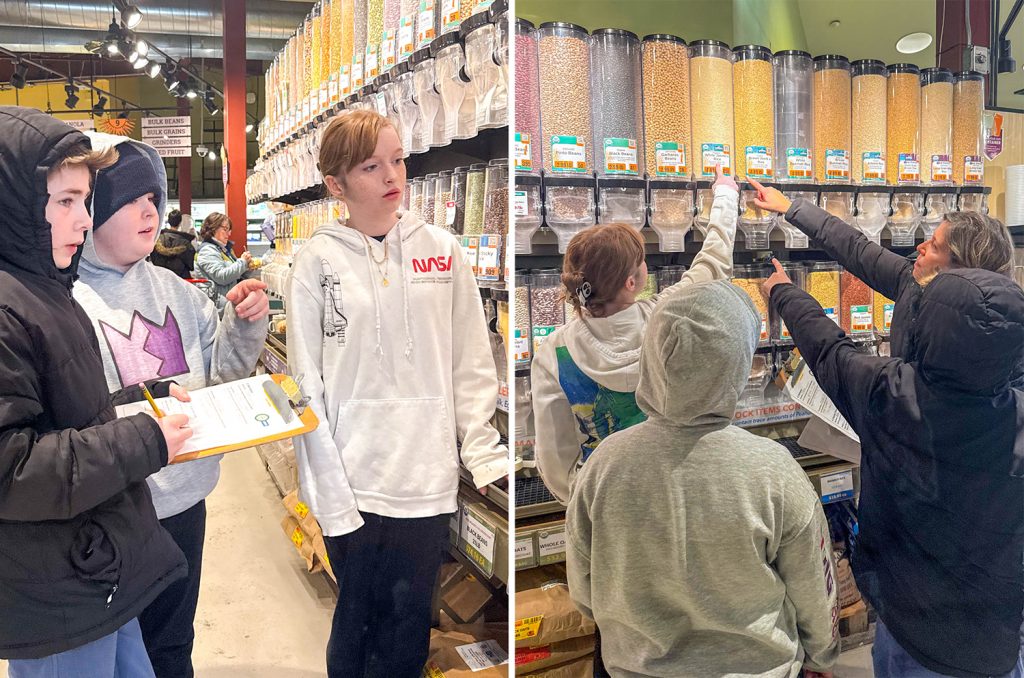
When we gathered back together, the conversation was thoughtful and wide-ranging.
Students noticed that some foods simply don’t grow in Vermont, but might be in season somewhere else. They observed price differences and talked about how offering multiple options helps different families shop in one place. They considered what might happen if a popular item disappeared from the shelves. They wrestled with the idea that staying financially healthy is part of what allows a community-owned store to support local farmers, employ staff, and continue serving the community.
One theme surfaced again and again: tradeoffs. No single product accomplishes every goal. A grocery store – especially a co-op – has to balance supporting local producers, offering accessible choices, remaining resilient when supply chains shift, and meeting the everyday needs of its customers. It’s not about perfect decisions. It’s about how those decisions add up over time. Walking the aisles as investigators rather than shoppers sparked questions we don’t always stop to ask.
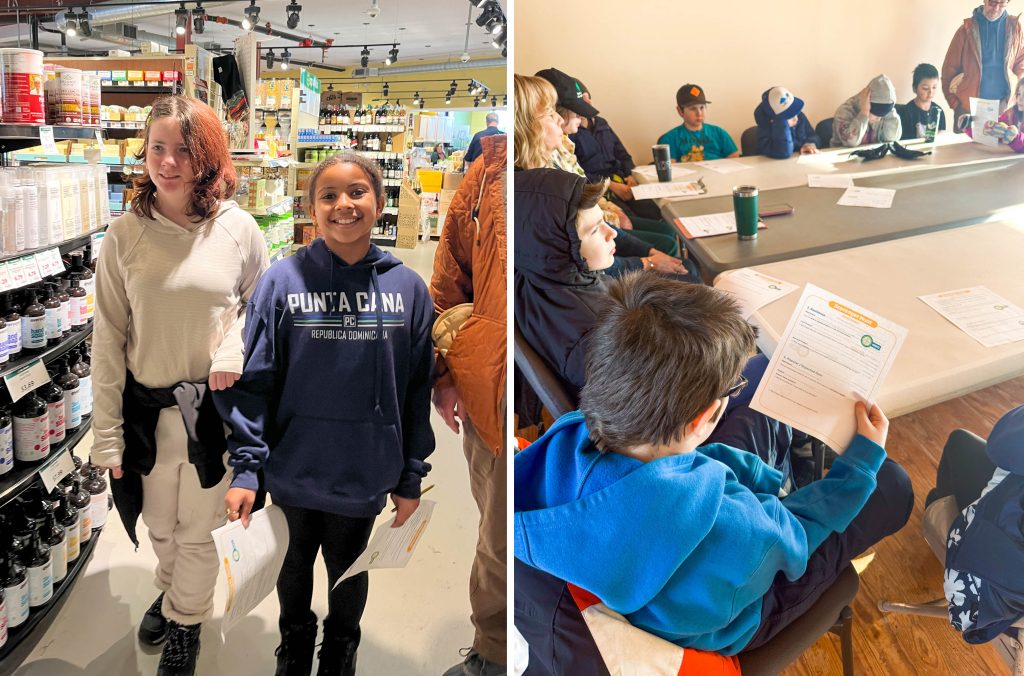
We’re grateful to Jessica McColly and the Mary Hogan fifth graders for spending their morning with us and for bringing such curiosity to the conversation. We’re always glad to welcome students into the store as part of their learning, and look forward to meeting next year’s class of 5th graders!